
California leaders say they will submit redistricting maps to voters, set Nov. 4 special election
Get AI-powered insights, summaries, and transcripts
Subscribe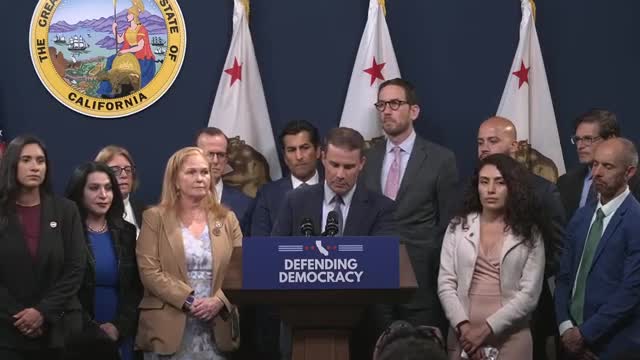
Summary
California legislative leaders said they voted to advance two bills that would submit proposed congressional redistricting maps to California voters and establish a Nov. 4 special election, and Gov. Gavin Newsom said he will sign the measures.
California legislative leaders said they voted to advance two bills that would submit proposed congressional redistricting maps to California voters and establish a Nov. 4 special election, and Gov. Gavin Newsom said he will sign the measures.
The leaders described the package as a temporary response to recent redistricting actions in Texas and to statements they attributed to former President Donald Trump. "This bill is a temporary measure in response to an urgent threat," a legislator said during remarks. Senate President Pro Tem Mike McGuire said the package gives Californians "the opportunity to say no to Donald Trump's power grab, and to stand up for our people, for our state, and for our democracy." Governor Gavin Newsom said he is "eager to sign a bill that no other governor in U.S. history has ever signed" that will put maps before the voters.
Why it matters: Speakers framed the legislation as a defense of voting fairness and a reaction to actions in other states. McGuire and other speakers repeatedly cited Texas leaders and Gov. Greg Abbott as initiating what they described as an effort to change congressional representation; they said California's action is meant to prevent similar effects here.
What leaders said they did: According to speakers at the event, the legislature voted on a package that includes (1) bills to submit proposed maps to voters and (2) measures to establish a special election process. Governor Newsom said he will sign those bills and issue a proclamation setting a Nov. 4 special election for voters to decide the maps. The speakers characterized the package as "temporary," and McGuire described independent redistricting as a goal that California supports in general.
Claims and attributions: Speakers made a range of factual claims and policy assertions during their remarks. Those included statements that Texas officials had "gave themselves 5 more house seats," that the president of the United States had asked Texas officials for seats, and numerical claims about California ballot participation ("80% of Californians ... submitted their ballots in the last election," and separate percentages for prior elections). Governor Newsom also referenced federal actions, including an emergency funding bill he described as providing $175,000,000,000 to reinforce immigration and security agencies. These statements were presented by speakers as reasons for the California response; they are reported here as attributed to the speakers and are not independently verified in this article.
Discussion versus formal action: Speakers described both debate and formal action. They characterized the vote already taken as formal action and said Newsom would sign the bills and issue a proclamation establishing the Nov. 4 special election. Other remarks were framed as discussion and political argument about national trends and threats to voting rights.
Dissent and legal risk: Speakers warned of potential legal challenges and of ongoing political opposition from Republicans; one speaker referred to recent lawsuits and said the state had seen "sham lawsuits" that the U.S. Supreme Court had rejected. The speakers repeatedly cast the bills as temporary and contingent on actions by other states and national actors, indicating a possibility of further litigation or political contest.
Next steps: According to the governor, he will sign the two pieces of legislation and issue a proclamation establishing the special election on Nov. 4. He said state officials will formalize the special-election process and take public questions as the process moves forward.