
California to expand CHP crime‑suppression teams to Los Angeles, San Diego and Central Valley
Get AI-powered insights, summaries, and transcripts
Subscribe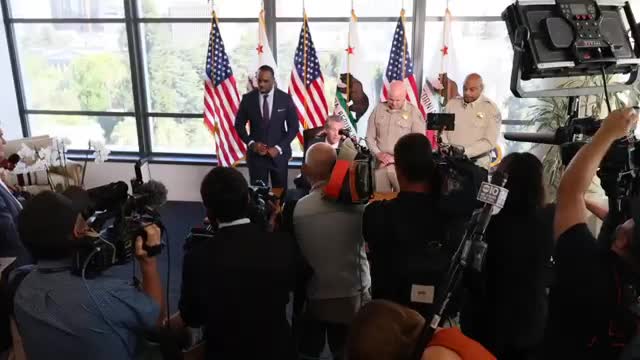
Summary
The governor announced an expansion of California Highway Patrol (CHP) crime‑suppression teams — building on operations begun in 2019 and scaled in 2023 — to include new full‑time teams in Los Angeles, San Diego and parts of the Central Valley; the administration cited arrests, seizures and prosecution partnerships as evidence of program success.
California will expand state crime‑suppression teams run by the California Highway Patrol to Los Angeles, San Diego and additional parts of the Central Valley, the governor announced at a press briefing in Sacramento on Oct. 5, 2025. The governor said the expansion builds on operations begun in February 2019, accelerated in early 2023, and previously deployed in Oakland, San Francisco, Bakersfield and San Bernardino.
The announcement matters because the governor framed the expansion as an operational response to persistent community safety concerns and as part of a broader public‑safety investment he said totals about $1,700,000,000 since 2019. "These operations will be targeted, they'll be data driven," the governor said, and described the teams as mobile, unannounced surges that will include K‑9 units, lieutenants, sergeants and dozens of officers depending on the operation.
At the briefing, the commissioner (unnamed) described plans to convert part‑time teams now in Kern and San Bernardino counties into full‑time units, to split the Kern team to cover Fresno, and to open teams in Sacramento, Los Angeles and San Diego. "For us, it's simple. Doing everything we can in our power to make California the safest place to live, work, and travel. We are all Californians," the commissioner said. He added that teams will generally start with a floor of 12 to 15 officers, with final numbers set to the size and needs of each community.
Administration officials cited prior results as justification for expanding the operations. The governor and other speakers referenced outcomes from earlier efforts in San Francisco and Oakland: about 6,200 citations in an earlier operation, recovery of hundreds of stolen vehicles, seizures of illegal firearms, and more than 700 pounds of fentanyl seized in the 2023 operation. The governor said "over 4,000 vehicles, in Oakland alone, stolen vehicles that have been recovered under this operation" and characterized the statewide total as more than 9,000 arrests to date.
A Caltrans official at the briefing, identified in the transcript as Tokes, said state data show declines in crime statewide in 2024 and argued residents should feel improved safety: "violent crime is down, in 2024, 4.5%. Property crime is down, 8.5% across the state in 2024," Tokes said. The commissioner added operational metrics for CHP enforcement this year, saying year‑to‑date the CHP had removed about 2,500 crime guns from the streets and seized nearly 1,100 pounds of fentanyl; the commissioner contrasted that with a prior high of about 2,100 crime guns in a previous year.
Officials said the expanded teams will coordinate with local police departments, county sheriffs and federal partners including the FBI and DEA when appropriate. The governor also cited prior federal partnerships conducted during the Biden administration, saying they were part of earlier efforts in San Francisco and other places. The operation described in the briefing will be organized from at least six state divisions and operate regionally.
The governor used the briefing to contrast the state expansion with federal proposals to federalize or deploy National Guard troops to cities, and he raised the pending federal court consideration of posse comitatus issues. "We're waiting, to see, that decision," he said, noting a federal district court judge was expected to rule on related matters; he said the outcome could have broad implications for the use of military or federal forces in U.S. cities. He also criticized federal tactics he described as "militarizing American cities," while reiterating that the state's approach is data driven and conducted in partnership with local elected officials.
Officials emphasized the operations are intended to address a range of quality‑of‑life and crime issues named by local partners, including open‑air drug markets, street racing and auto theft. The Caltrans representative also framed state cleanup and encampment work as related to public safety and said cleanup efforts include referrals to housing and services rather than only dispersal.
The briefing included multiple questions from reporters about whether the state expansion responded to federal plans to send National Guard troops to cities and whether surges into places where crime rates have fallen were justified. The governor replied that "good enough never is" and said the state will focus on hot spots and community requests; he noted mayors and county leaders have asked for assistance in places that have seen declines but where local leaders still want more enforcement.
Officials did not present a public timeline for every new deployment and said they would not pre‑announce specific dates or locations for unannounced operations. The commissioner said operations will be planned 30, 60 and 90 days in coordination with local partners and that results will be shared after execution. The briefing did not include a vote or new legislation; officials described the announcement as an executive operational expansion and a continuation of prior grants and legislation passed earlier on retail theft and related prosecutions.
The governor closed by saying the state will continue to publish weekly summaries of enforcement activity, referring to a recurring "take down Tuesdays" report. He invited further questions but did not provide additional written directives at the briefing.
Ending: The announcement outlines an operational expansion rather than new statutory authority; exact deployment timing, detailed staffing counts and local implementation plans will be set in follow‑up coordination with county and city law enforcement agencies and will be reported publicly after operations take place.