
City unveils economic‑mobility push, targets childcare workforce pipeline and joins ICMA mobility program
Get AI-powered insights, summaries, and transcripts
Subscribe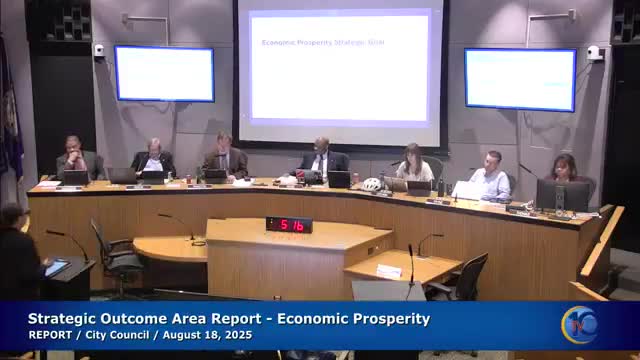
Summary
City staff presented an economic‑prosperity update stressing that many local households are in the “ALICE” or ‘muddy middle’ and described plans to develop a childcare workforce pipeline, pursue national grant programs and implement an ICMA special assistant to co‑design local anti‑poverty strategies.
City outlines economic mobility strategy, proposes childcare workforce pipeline and accepts national assistance Ashley Marshall, presenting on the city’s economic prosperity strategic outcome area on Aug. 18, 2025, told City Council that Charlottesville is focusing on economic mobility for households who earn too much to qualify for safety‑net programs but too little to meet local costs, and she proposed a childcare workforce pipeline as an early test project. Why it matters: Marshall said more than 9,500 Charlottesville households are at or below the ALICE (asset limited, income constrained, employed) threshold and that rising housing costs leave many families stretched. She emphasized that addressing childcare workforce shortages — which can keep classrooms closed even when subsidies exist — is central to enabling caregivers to return to work and to expand workforce participation. Marshall reviewed existing city programs across departments that support residents (career programs, utilities assistance, summer internships, workforce readiness and entrepreneurship supports). She said the Office of Economic Development’s Go programs and partnerships (including Ready to Work, Go Higher and Go Startup) complement the city’s anti‑poverty aims by training workers and supporting small business and entrepreneurship. On data and need: Marshall cited apartments.com data showing average rent near $1,700 per month and noted that a household would need annual earnings near $69,000 for standard affordability. She reported that roughly 52% of Charlottesville households are at or below the ALICE threshold and reiterated that many families cannot access traditional safety‑net programs despite financial insecurity. Childcare workforce proposal and partnerships: In response, the city proposed a three‑part strategy to build a child care workforce pipeline: create career pathways for classroom leaders, open more licensed early‑learning classrooms to expand access and improve early learning outcomes for children. Marshall said the city will partner with United Way Greater Charlottesville’s Ready Regions team and local early‑learning providers to test a business plan for the model and, if the test is successful, pursue investments to scale the program. National partnerships and assistance: Marshall announced Charlottesville’s acceptance into two national efforts. The city was selected for the Southern Cities initiative (one of 20 southern communities) and was accepted into the ICMA Economic Mobility and Opportunity Special Assistant (EMOSA) program, supported in part by the Gates Foundation; ICMA will provide a two‑year executive‑level position to lead community‑engaged co‑design and implementation work. Questions from council touched on whether these national programs were new opportunities or previously available; Marshall said some are inaugural or new cohorts and stressed that the city’s past programming provides a foundation for scaling work. No formal council action was taken during the update; Marshall said staff will return with implementation details and any requests for program or budget decisions.