
Residents and community groups urge council to block 11‑story West Main student tower, cite historic inequities
Get AI-powered insights, summaries, and transcripts
Subscribe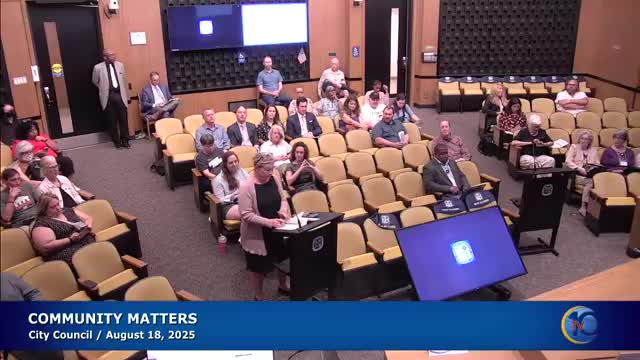
Summary
Multiple residents and community organizers urged Charlottesville City Council to oppose an 11‑story LV Collective student housing project on West Main Street, saying it will overshadow the West Haven public housing community and deepen historic patterns of displacement tied to urban renewal.
A string of residents and community organizers told Charlottesville City Council on Aug. 26 they oppose a proposed 11‑story student housing project on West Main Street, arguing the building would loom over West Haven and deepen historic patterns of exclusion created by past urban renewal. Speakers including Betsy Recker, who identified herself as a member of the Charlottesville Planning Commission, and community organizers with the Charlottesville Public Housing Association of Residents described the proposal as a threat to accessibility, sunlight and neighborhood connections for West Haven residents. “This building would sit right on top of the West Haven residence proposed walkway and obstruct their accessibility and visibility,” said Wendy (community organizer), describing the lack of a current accessible path from West Haven up to West Main Street. Speakers tied the opposition to the history of Vinegar Hill and to West Haven’s design as a lowered and isolated public housing development. City staff and councilors noted a critical legal constraint: zoning for the site is CX‑8, which, as a councilor explained during the meeting, currently allows an 11‑story building “by right” with unlimited density. That means the principal discretionary review left to the city is design review by the Board of Architectural Review, not a special-use permitting process that would have allowed broader negotiation of community benefits. Why it matters: West Haven and the Tenth and Page neighborhood are historic Black neighborhoods; speakers said the proposed project would symbolically and materially deepen patterns of displacement and exclusion. Community organizers called for “good density,” deep affordability and genuine engagement with residents rather than what they described as token consultation. What council heard: Speakers raised specific concerns about a proposed walkway that would be blocked by the project, pedestrian safety, potential rescue/response access, mental‑health impacts of being “walled in,” and the effect on long‑term residents’ sunlight and view corridors. Betsy Recker suggested the city could proactively pursue land easements or have Parks and Recreation acquire connecting easements to preserve neighborhood connections. Zoning and process: A councilor noted that the site’s CX‑8 zoning removes earlier discretionary height limits and that changing that outcome would require rezoning. Council members discussed the limits of the Board of Architectural Review and suggested zoning changes would be necessary if the community seeks a stronger say in future projects. No formal vote on the West Main project occurred at the meeting; speakers’ remarks were entered during the public comment period and combined with other agenda items addressing design and development. What residents asked council to do: Speakers urged the council to prioritize affordable, community‑centered development and to consider rezoning or other tools to ensure neighborhood voices and benefits are incorporated in projects that could affect historically marginalized areas.