
Council hears school facility needs, rough cost estimates and sales‑tax option for construction
Get AI-powered insights, summaries, and transcripts
Subscribe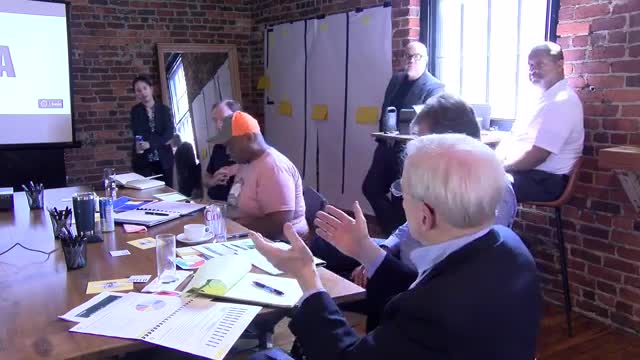
Summary
At the retreat, staff outlined school facility maintenance and modernization needs and presented rough cost estimates; presenters said a local sales‑tax option under consideration could produce bond capacity but would not fully cover larger modernization scenarios.
City and school staff briefed the council Aug. 15 on the condition of school facilities and the scale of possible investments to keep buildings in a state of good repair or to pursue broader modernization. Staff described a spectrum of needs: routine maintenance and HVAC/roof repairs grouped as “state of good repair” and larger modernization that would expand school footprints or remake buildings akin to recent large projects.
Staff presented a conservative ‘‘state of good repair’’ estimate and larger modernization estimates for elementary and secondary schools — rough sketches the presenters cautioned are preliminary. The presentation used $100 million as an illustrative figure for a broad package of state‑of‑good‑repair work and showed larger multi‑hundred‑million figures for full modernizations that would use swing space or phased construction. Presenters stressed the estimates are high‑level and that costs will vary with scope.
Councilmembers asked about funding options, including a sales‑tax option previously discussed in public forums. Staff indicated a one‑cent sales‑tax scenario had been modeled to generate roughly $14 million a year in local capacity to support school construction and would increase bond capacity (figures presented were schematic and will be refined), but that the sales‑tax revenue would not fully cover large-scale modernization at current cost estimates.
The discussion also covered the trade‑offs between investing in staff and programs versus capital improvements and noted capacity constraints in project management when multiple large projects overlap. Staff were asked to return with refined cost‑estimates, sequencing options and trade‑off scenarios that show impacts on operating budgets and other capital priorities.