
Blue Ridge Juvenile Detention director outlines education, mental health and reentry programs
Get AI-powered insights, summaries, and transcripts
Subscribe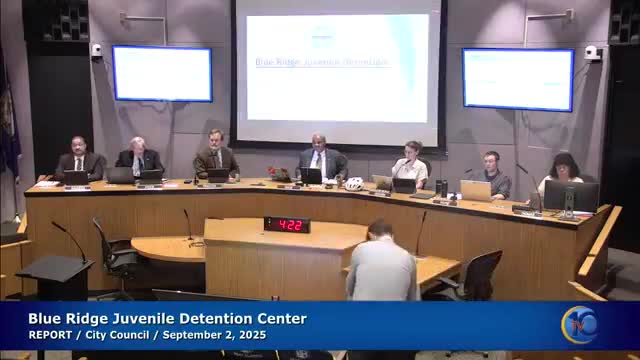
Summary
At the Sept. 2 City Council meeting, Jay Volley, director of the Blue Ridge Juvenile Detention Center, gave an overview of the center's programs, services and recent trends, saying the facility emphasizes education, mental-health care and family-involved reentry supports.
At the Sept. 2 Charlottesville City Council meeting, Jay Volley, director of the Blue Ridge Juvenile Detention Center, gave an overview of the center's programs, services and recent trends, saying the facility emphasizes education, mental-health care and family-involved reentry supports. "Students receive six hours of instruction daily, exceeding the 5.5-hour legal requirement," Volley said.
Blue Ridge is a 40-bed regional juvenile detention center opened in February 2002 and governed by a consortium that includes Albemarle County (the fiscal agent), Charlottesville and several surrounding localities. Volley said the facility serves males and females ages 10 to 21 and operates year-round, providing 11 months of instruction with small class sizes and individualized attention. He said students can earn state-approved diplomas and industry-recognized certifications.
Volley described the center's mental-health resources: a full-time clinician, a regionally provided case manager from Region 10, weekly psychiatrist visits for medication management and therapeutic programming that includes a greenhouse-and-garden program used as a therapeutic tool. Medical coverage includes a 40-hour-a-week licensed practical nurse on site and access to a family nurse practitioner and external specialty care when needed. Staff receive MedTech certification to administer medications and respond to emergencies.
The director outlined the distinction between predispositional residents (awaiting court) and post-dispositional residents (sentenced or placed by a judge). He described the post-dispositional Community Placement Program (CPP) that provides a structured, local alternative to juvenile correctional facilities, with cognitive and life-skills curricula and family counseling. The center also provides a 21- to 30-day CAP assessment program that performs psychological, educational and vocational evaluations for youths committed to the Department of Juvenile Justice.
Council members asked about trends. Volley attributed an increase in average length of stay to a Department of Juvenile Justice transformation that instituted minimum sentences, which he said raised stays even for lesser offenses. He also urged stronger post-release placements and services: "If you put a youth back in the same neighborhood with the same peer group, the odds of them returning are very high," he said.
Councilors and staff discussed literacy challenges. Volley said more than 90% of the facility's residents read two to three grade levels below their current grade and that individualized instruction helps address that gap while residents are in custody. He said dialectical behavior therapy and other evidence-based programs have recently been implemented.
The presentation was informational; the council did not take formal action. Council members thanked Volley for the report and asked staff to continue coordinating with schools and community partners on reentry supports and alternatives to incarceration.