
Fairmont Morgantown Housing Authority reports full voucher use, closed waiting list and seeks city help for development plan
Get AI-powered insights, summaries, and transcripts
Subscribe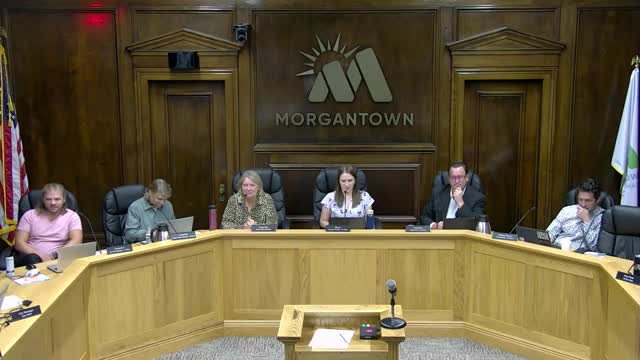
Summary
The Fairmont Morgantown Housing Authority told Morgantown City Council it has fully used its voucher allocation, closed its waiting list and is pursuing a development plan for Upper Falling Run that will require city or partner funding.
Crystal Caruso, executive director of the Fairmont Morgantown Housing Authority, told Morgantown City Council on Aug. 26 that the agency has fully expended its voucher allocation, has closed its waiting list and needs local support to fund a development plan for Upper Falling Run.
Caruso said the authority manages both public housing and Housing Choice Vouchers, and that “we have about 1,289 of those vouchers.” She told council the waiting list was closed in February 2025 and that the authority stopped issuing new vouchers in October 2024. “I think there's 1,105 on our waiting list,” Caruso said, adding that 151 applicants are in a holding pattern that would be served first if vouchers become available.
The agency reported operating 136 public-housing apartments in Fairmont and said it is spending roughly $677,000 per month on rental subsidies across its four-county service area. Caruso described several special-purpose voucher programs the authority runs: 57 emergency-housing vouchers, 20 VASH vouchers for veterans and 64 project-based vouchers. She also said 70 families are enrolled in the authority’s Family Self-Sufficiency (FSS) program.
Why it matters: Council members and staff said the numbers illustrate constrained capacity in federal programs and the local need for affordable units. Caruso said there are not new general vouchers to request from HUD and that any new allocations are typically special-purpose awards targeted to subpopulations, such as veterans or persons with disabilities.
Caruso highlighted new or expanded services the authority has launched, including a landlord repair reimbursement program and certification in the Home Equity Conversion Mortgage (HECM) program. She said the authority moved offices to the Spruce Center and expanded its FSS program by roughly 50 participants.
On development, Caruso said progress on the agency’s Upper Falling Run property has stalled. She asked the city to consider helping fund a development plan. “Our plan was to raise the ask the city for '25. We were gonna ask the housing fund for 10 to 20, and then we were gonna ask one of them for the remainder,” she said, estimating that a development plan would cost about $75,000. Caruso said federal funds generally cannot be used to pay for that development-plan work and that the authority needs a local match or other seed funding to attract additional funders.
Councilors asked clarifying questions about what is limiting the authority’s ability to house people; Caruso and staff said vouchers — not housing stock — are the primary constraint. She described a housing navigator position, paid with ARPA funds, who maintains a database of rental units and landlord contacts used to match households to available housing even when vouchers are not available.
The presentation included discussion of the authority’s advocacy needs: Caruso asked council to help rally support to state legislators if proposed budget cuts to federal housing programs materialize.
The authority’s current priorities Caruso listed include reapplying for fair-housing education funding, completing a development plan for Upper Falling Run, continuing unsheltered case conferencing with regional partners and pursuing innovative homeownership pathways such as the voucher-to-homeownership (VHOP) program.
Ending: Caruso closed by asking the council to consider the authority’s request for help funding the development plan; no formal city action on the plan was taken at the meeting.