
Port Orchard council adopts overhaul of code enforcement procedures, moves appeals to hearing examiner
Get AI-powered insights, summaries, and transcripts
Subscribe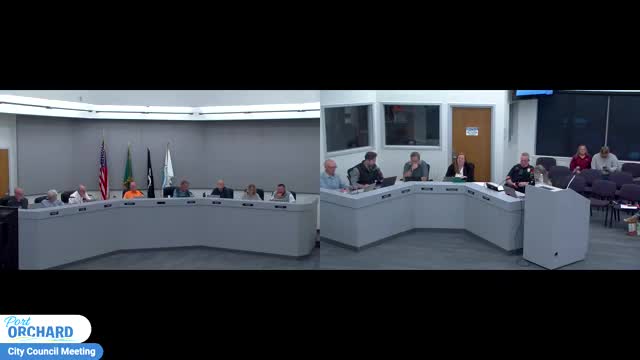
Summary
Council adopted an omnibus ordinance repealing and replacing chapter 2.64 of the Port Orchard Municipal Code to expand enforcement tools and route administrative appeals to the contracted hearing examiner rather than the city council.
The Port Orchard City Council unanimously adopted an ordinance repealing and replacing chapter 2.64 of the Port Orchard Municipal Code, a package of amendments city staff said will broaden enforcement tools, clarify administrative appeal procedures and transfer many appeals from council review to an independent hearing examiner.
City staff said the revisions follow a multi-year audit of code enforcement tools and aim to harmonize chapter 2.64 with the city’s hearing-examiner procedures (chapter 2.84) and Title 20 (development code). Staff described changes that would add enforcement options, clarify notice and appeal timelines, and route appeals of many enforcement actions and land-use decisions to the city’s contracted hearing examiner.
The staff presentation said the current arrangement — where an appeal could land with the council, putting elected members in a quasi-judicial position — can lead to appearance-of-fairness concerns and limit council members’ ability to communicate with constituents about matters that might later be appealed. Staff said insurers and municipal practice commonly favor an independent hearing examiner to depoliticize administrative appeals.
City staff explained the proposal preserves a separate abatement hearings officer role for dangerous-building abatement orders; the abatement hearings officer — identified on the record as Judge Drury — would continue to hear those matters while the hearing examiner would handle other enforcement appeals. The staff report emphasized the change is not retroactive and that the ordinance takes effect five days after publication.
Councilmembers asked for clarifications about why the municipal judge would not be used in lieu of a hearing examiner. Staff replied the municipal judge’s caseload focuses on criminal matters and general civil dockets and that hearing examiners typically possess land-use or building-code expertise needed for technical administrative appeals. Staff also noted budget and cost considerations and that many other jurisdictions use hearing examiners for land-use appeals.
Councilmember Morrissey called the package “a generational leap” in enforcement effectiveness. After questions and discussion, the council voted to adopt the ordinance. The motion, made on the staff recommendation, passed unanimously.
The ordinance broadens the code-enforcement officer’s toolbox and clarifies filing and processing timelines for appeals, according to staff. It also aims to ensure appeals are heard more expeditiously by the contracted hearing examiner, identified in the discussion as attorney Phil Olbrex, who staff said has served in that role for “a few years.”