
Nelson County spotlights Foster Heights adult teacher apprenticeship; three local apprentices described career pathway
Get AI-powered insights, summaries, and transcripts
Subscribe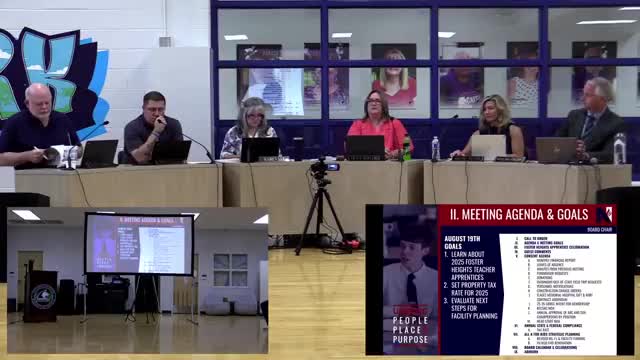
Summary
At its Aug. 19 meeting the Nelson County Board of Education heard Foster Heights Principal Hill and three adult teacher apprentices describe a paid apprenticeship that combines classroom work, micro-credentials and university coursework as a route to teacher certification.
Nelson County Board of Education members on Aug. 19 celebrated a Foster Heights program placing three paid adult apprentices in classrooms as an alternate route to teacher certification. Principal Hill introduced the apprentices and said the program benefits both the district and students by expanding staffing and providing on-the-job training. “They’re involved in everything that our teachers are with, thinking about how to design lessons, how to differentiate instruction, how to analyze data,” he said. The apprentices described summer micro-credentialing and leadership pathways that let them earn pay while continuing coursework at WKU and gain supervised classroom experience. Carly Gordon, who is working in a first-grade classroom, said the micro-credentialing “allows us to earn money while earning our degree.” Micah Whitson, a third-grade apprentice, said the summer leadership pathways helped him learn “high-yield instructional strategies” in weeks that would otherwise take a semester or more in a traditional program. Avery Brooks, a fifth-grade apprentice, said the experience has given her “strategies, methods, and techniques to better support students” and helped build stronger relationships with pupils. Board members and staff emphasized the program’s role in recruitment and retention. District staff noted apprentices receive layered support — including mentors and district coaches — that correlates with higher completion and content-exam scores, compared with some traditional routes. A district staff member said practice-exam results for the program “scored well above average.” The presentation noted apprentices come with varied prior college or school experience and that Foster Heights and district leaders see the program as a long-term staffing strategy rather than a one-time fix. The board offered informal congratulations; there was no formal vote tied to the presentation. Audience members and board members later encouraged community members interested in teaching to investigate local apprenticeship and student-worker opportunities. The board’s recognition came as part of a larger Aug. 19 agenda that included tax-rate action and several facility-related motions.