
Rockcastle Board hears breakdown of state equalization, building fund and district budget
Get AI-powered insights, summaries, and transcripts
Subscribe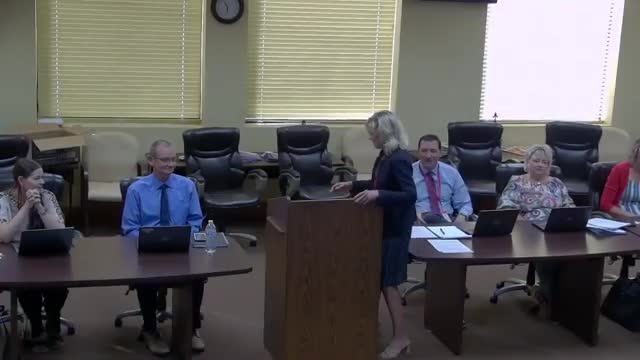
Summary
Superintendent Dr. Ballinger outlined how locally passed "recallable nickels" qualified the district for state equalization payments that boost the building fund, described limits on how the funds may be used and summarized the district—s $54.5 million operating budget and current cash balances.
Superintendent Dr. Ballinger told the Rockcastle County Schools board that two locally passed recallable "nickels" have qualified the district for state equalization payments that will be deposited into the district—s building fund over the next 20 years. "Nickel 1 will generate over $19,000,000 that will go directly into our building fund. Nickel 2 will generate over $19,000,000for a total of over $38,000,000 that we will receive as a free gift from the state over 20 years," Dr. Ballinger said.
Dr. Ballinger said the equalization payments are restricted to facility use only and cannot be used for salaries or general instruction. "We can only use this revenue for facilities only," she said. She told the board the legislature approves equalization during its biennial budget cycle and that equalization is not guaranteed but that Rockcastle has been equalized twice following the recallable nickels passed in 2022 and 2023.
The superintendent described how the nickels increased the district—s annual building-fund revenue to about $3.8 million and unlocked roughly $22.2 million in additional bonding capacity (separate from the middle school bond the district already issued). She said the district will receive equalization payments annually for 20 years and used an example showing that a new $5 million, 20-year bond at an assumed 5% interest rate would carry an annual debt service of roughly $396,000, a figure the district could cover from the building fund revenue stream.
Board members asked whether the state places other limits on how the funds may be used. Dr. Ballinger referenced a legislative change that began as House Bill 678 and said it temporarily (through 06/30/2027) allows equalization dollars to be used for sports facilities and other facility needs so long as those projects are on the district—s facility plan; she said the allowance could change after that date.
District finance staff later presented the 2025 working budget overview. The proposed budget totals $54,500,000 across all funds, with a $38,000,000 general-fund plan. Instruction received $19,100,000 (about 50% of the general fund), of which $15,600,000 is staff salaries and fringe. The board packet listed a current building-fund cash balance of about $7,400,000, a debt-service budget of $1,900,000 for the year and an expected transfer of $1,200,000 from local tax receipts into the building fund when taxes are collected this fall.
Finance staff also noted the working budget includes a 2% raise for all staff in the coming fiscal year and that the district maintains a contingency (carry-forward) of approximately $4.4 million. "Our contingency is about 11%, which is still very strong," the staff summary said.
Discussion: board members and staff discussed timing, how 20-year equalization streams interact with bonding decisions, and the need to put projects on a district facility plan to qualify for the funds. Staff said some facility work already planned (roofs, windows, playground access improvements and ATC roof) could be funded from building fund cash or by new bonds supported by equalization revenue.
Next steps: staff said they would provide the facility plan dollar totals on request, pursue additional information from the district architect about specific small projects (for example playground accessibility improvements), and schedule any working sessions the board requests before making further bond decisions.
Ending: Board members praised the clarity of the presentation and discussed holding a future working session so trustees, the superintendent and the district architect can map near-term and long-term facility priorities against the newly available funding stream.