
Board approves new policy allowing inspections of lockers, desks and vehicles with limits and notification requirement
Get AI-powered insights, summaries, and transcripts
Subscribe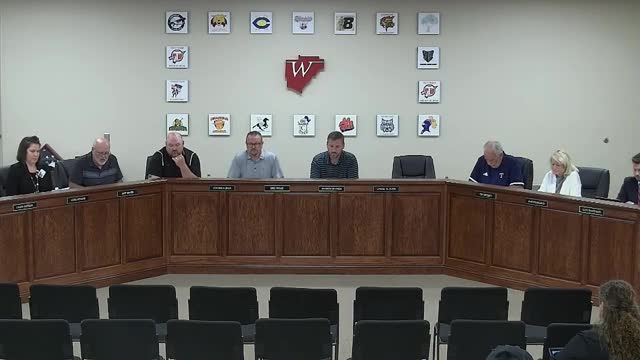
Summary
Trustees adopted proposed Policy 4‑300 permitting searches of student lockers, desks and vehicles, with language on consent, reasonable suspicion, witness and notification; trustees debated the 24‑hour parental-notification provision before approving.
Doctor Walter Lambert, a district staff member, presented the proposed Policy 4‑300 on inspection of student lockers, desks and vehicles and the board approved the policy on its second and final reading after discussion about notification timing and search safeguards.
The policy matters because it specifies when school personnel may inspect student storage areas, vehicles parked on school property and, under limited conditions, a student’s person or personal items; it also sets procedural safeguards such as same‑gender witnesses, private search locations and a parent‑notification requirement.
Lambert said the policy clarifies that storage areas assigned to students remain school property and lists prohibited items (for example, alcohol or items that threaten health or interfere with school purposes). On searches of a student’s person or possessions, the draft requires staff to seek the student’s consent first; if the student does not consent, a search may proceed only when school‑authorized personnel have individualized reasonable suspicion that the search will turn up evidence of a law or rule violation or of a condition that endangers safety or health. The policy requires person searches to be witnessed by someone of the same gender and conducted in private; it also allows administrators to revoke parking privileges or remove vehicles when reasonable grounds exist and the student refuses consent.
A central point of debate was the policy’s parent-notification language. Section 2 says a student’s parent or guardian “shall be notified when possible of the search within 24 hours.” Mr. Mosby questioned whether 24 hours was too long; he said parents would reasonably expect notification sooner. Multiple board members, building administrators and Dr. Lambert responded that 24 hours represents a maximum for “worst-case scenarios,” such as overnight extracurricular trips or incidents involving many students that require time to investigate. Several principals told the board they typically call parents immediately when a search occurs and that longer notification windows are rare. The board also clarified that routine “search” commonly meant asking a student to remove a jacket or open pockets and that pat‑downs are not standard practice except in extreme safety situations that would likely involve the school resource officer.
After discussion the board moved and seconded the policy for adoption; the motion carried by voice vote. Dr. Lambert said the superintendent would issue implementing regulations and guidance to building personnel.
Less-critical details: trustees discussed that the attorney had recommended not creating additional liability by imposing a notification requirement; the 24‑hour language was included by the administration out of respect for parents and to allow limited operational flexibility in complex incidents.