
Board adopts policy allowing locker, desk and vehicle inspections; members debate 24‑hour parental‑notice window
Get AI-powered insights, summaries, and transcripts
Subscribe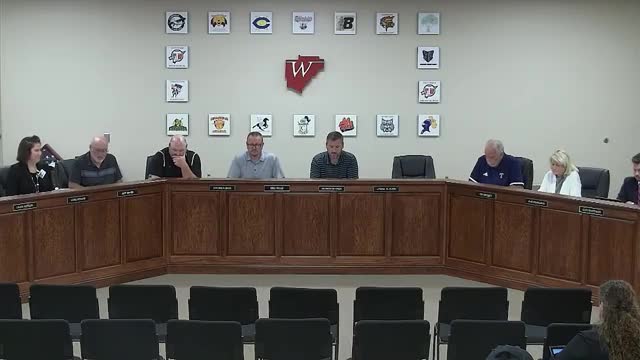
Summary
The board approved proposed Policy 4300 authorizing inspection of student lockers, desks and student vehicles on school property and permitting searches of a student’s person when consent is withheld and individualized reasonable suspicion exists; trustees debated a provision that requires notification to parents within 24 hours.
Dr. Walter Lambert, a district administrator, presented proposed Policy 4300 — Inspection of Student Lockers, Desks and Student Vehicles — and recommended board approval. "I recommend the board approve the proposed policy as presented," Dr. Lambert said.
Why it matters: the policy formalizes when and how school personnel may inspect student storage areas and vehicles on school property, and it spells out procedures for searches of a student’s person and notification of parents. Board discussion focused on the policy’s scope and the sentence that requires notifying a student’s parent or guardian "within 24 hours" when a search of the person occurs.
Key provisions presented in the packet and read into the record include: the school corporation retains ownership and control of lockers and other storage assigned to students; prohibited items include those forbidden by state law or that pose a health or safety hazard; prior to searching a student’s person or immediate possessions, staff must seek the student’s consent; if the student refuses, searches may proceed based on individualized reasonable suspicion that the search will produce evidence of a law or policy violation or a danger to safety; searches of a student’s person must be witnessed by an adult of the same gender and conducted in private; if possible, the parent or guardian shall be notified within 24 hours of the search; and the superintendent will issue regulations for implementation, including vehicle‑parking consequences such as revocation of parking privileges.
Board debate: one trustee said the 24‑hour notification allowance is broader than typical practice and would prefer a shorter notification window so the policy matched principals’ expectations to call parents promptly. An administrator who read policy language stressed the search limits and that staff first attempt to obtain consent and that searches are not random. Dr. Lambert and other administrators explained that the 24‑hour timeframe is a maximum designed to cover scenarios such as overnight extracurricular trips, large-scale incidents that require multiple contacts, or cases when attempts to reach parents immediately are unsuccessful. The district’s attorney was cited as advising against adding additional legal exposure by a narrower mandate. Several board members said their principals routinely call parents immediately when practicable.
Action taken: the board moved, seconded and approved the proposed Policy 4300 after discussion.
Less critical details: presenters emphasized searches are safety‑driven (weapons, drugs, hazards) and that pat‑downs are not standard practice except in extreme cases involving clear safety threats; school resource officers may be involved when appropriate.
Next steps: the superintendent will issue regulations and guidance to principals and staff for consistent implementation of Policy 4300.