
Council tables two traffic ordinances and advances several Chapter 7 traffic changes
Get AI-powered insights, summaries, and transcripts
Subscribe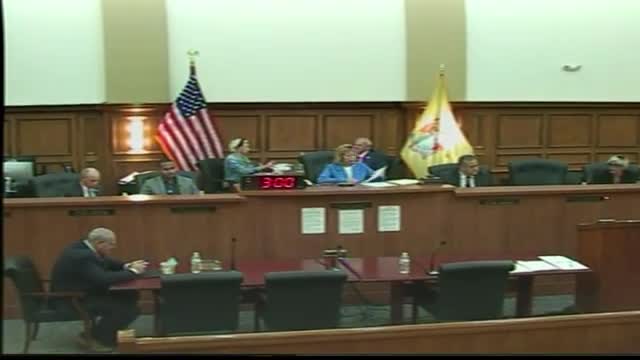
Summary
At its Aug. 19 meeting the Linden City Council voted to table ordinances 69-28 and 69-29 and advanced multiple amendments to Chapter 7 (traffic), including new school pick-up/drop-off rules, bus-stop and handicap-parking changes, and a 'don't block the box' critical intersection designation.
The Linden City Council on Tuesday tabled two proposed traffic ordinances and approved or introduced multiple other changes to Chapter 7 of the city code governing traffic.
Council members voted unanimously to table Ordinance 69-28 and Ordinance 69-29 to a future date after a motion to postpone was made on the floor. The roll call recorded in the transcript shows all present council members voting yes on the motion to table both measures.
Council then considered a string of Chapter 7 amendments. Ordinance 69-32, which amends Section 7-21 to add a westbound restriction on Kennedy Drive from West Simpson Avenue to South Stiles Street, was moved, seconded and approved following a roll-call vote. Ordinance 69-33 adds a left-turn prohibition from Park Avenue northbound into 1951 East Edgar Road (the Wawa) at South Park Avenue; the hearing was closed and the motion to adopt passed on roll call. Ordinance 69-34 updates street handicap-parking listings to add on-street handicap spots at specified addresses. Ordinance 69-35 adds a “don’t block the box” critical intersection designation at East Linden Avenue near the driveway of 2005 East Linden Avenue on the north side.
During the public comment portion of the hearing on Ordinance 69-35, resident John Kaiser of 23 West Montsell Avenue asked how frequently tickets are issued for blocking intersections and urged stronger enforcement on arterial routes; he said he has photographic evidence of blocking at Clinton and Woodlawn. The transcript shows no enforcement response from an identified chief during the meeting; the council record indicates the ordinances were advanced and will proceed according to the city’s public-notice schedule.
Several additional traffic-related ordinances were introduced later in the meeting: Ordinance 69-36 (school pick-up/drop-off zones for East Morris Avenue, Monday–Friday, 7 a.m.–9 a.m. and 2:30 p.m.–4 p.m.), 69-37 (bus-stop location on East Morris Avenue, specified hours), and 69-38 (removal of a handicap-parking on-street listing at 1018 University Terrace). For each ordinance the clerk confirmed proper publication and posting and reported no written communications received by the clerk’s office unless otherwise noted.
What happened formally: motions to table or adopt were recorded on the public record and supported by roll-call votes; several ordinances closed public hearing and were adopted while others were introduced for future hearing as shown in the meeting minutes. No new enforcement protocols or schedule of citations were adopted at the meeting; public commenters asked the council to clarify enforcement responsibility.
Next steps: the ordinances introduced will follow the city’s publication, posting and hearing schedule; council and staff will handle any enforcement clarifications outside this meeting record.