
Library ad hoc committee narrows scaled options as city warns funding likely requires voter measure amid major streets backlog
Get AI-powered insights, summaries, and transcripts
Subscribe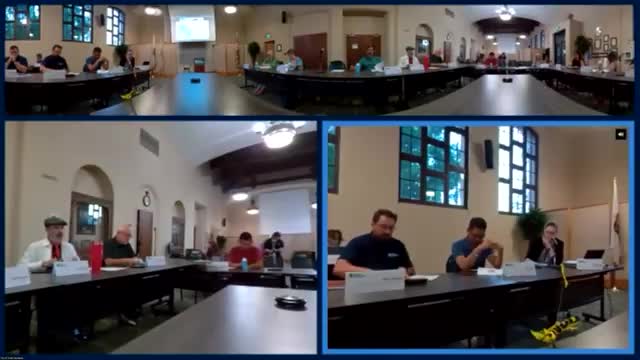
Summary
At a meeting of the library–community center ad hoc committee, city staff and the consultant team presented scaled design and cost options for a co‑located library and senior center and warned that financing the project alongside an urgent streets backlog would likely require a voter tax or bond measure.
At a meeting of the library–community center ad hoc committee, city staff and the consultant team presented scaled design and cost options for a co‑located library and senior center and warned that financing the project alongside an urgent streets backlog would likely require a voter tax or bond measure. City Manager Todd Heilman and consultants described three principal alternatives — a renovation, a renovation-plus-addition and a larger new‑construction option — and gave cost ranges and timeline guidance for council consideration.
Why it matters: The committee was asked to frame recommendations for the city council while officials weigh whether to include a library ask with broader capital needs. Todd Heilman said the city faces a major streets funding shortfall and that the library options must be sized against that reality; consultants said design choices and market escalation make exact cost estimates variable.
The options and costs: Consultant presenters outlined three core program scenarios. - A renovation of existing buildings (option A) was shown with a 2025-dollar low estimate near $18.8 million and a high near $22.6 million; the presentation escalated that range to roughly $21 million–$25.3 million to reflect anticipated construction cost increases. - A renovation of the 1930s community room plus new construction to about 27,300 square feet (option B) had a 2025-dollar low of roughly $32.8 million and a high of $37.1 million (escalated to about $36.6 million–$41.4 million). - A larger new construction option of about 40,780 square feet (option C) had a 2025-dollar low near $47.5 million and a high near $53.8 million (escalated to roughly $53 million–$60 million). Consultants said cost ranges account for site unknowns, finish levels and a 4.5% per‑year escalation assumption; construction contingencies shown were about 10% for new construction and 15% for historic renovation work. The team also noted an existing private donation of about $2.5 million set aside for the project.
Program size and service assumptions: Vicky, the project planner from the consultant team, said the study uses a 2045 population planning basis of 30,000 residents. The needs assessment recommended a modern, full‑service library sized at roughly 20,000–30,000 square feet as a standalone option; combined library and recreation space scenarios produced a recommended combined facility range of about 27,000–41,000 square feet depending on how much recreation programming is incorporated. The team estimated that, on the recreation side, 0.75–1.0 square foot per resident would equate to about 22,500–30,000 square feet and that a shared, co‑located facility could meet 7,000–11,000 of that total, leaving approximately 12,000–16,000 square feet of remaining indoor recreation need to be sited elsewhere.
Timeline and next steps: Consultants said the ad hoc committee and library board will receive updates in October and that a recommended comprehensive site plan would go to the city council in November. City Manager Todd Heilman said staff plan community outreach this fall to assess public tolerance for a bond or property‑tax measure and will return to council with options on structure and timing; staff framed November as when council will likely begin formal consideration and suggested a possible voter measure in 2026 depending on council direction and community feedback.
Funding context and streets competition: Todd Heilman told the committee that the city faces a substantial streets and sidewalks funding gap — the consultant briefing estimated roughly $75–80 million would be required to address about a third to half of the city's streets over a 15‑year horizon. Staff described current annual local gas‑ and return‑tax revenues (Measure R/Measure M and similar returns) as on the order of about $1.5–$2.0 million a year — enough for routine maintenance but far short of large‑scale reconstruction needs, which the presentation estimated at roughly $1–1.5 million per mile for full reconstruction. The consultants and manager emphasized that local capacity for multiple large capital asks in the near term is limited and that a combined streets/library ballot question would require careful public outreach and a clear message.
Operational and program considerations: The consultants discussed options for maintaining the 1930s community room and integrating senior services with library services to provide single‑level senior access and shared spaces (kitchen, multipurpose rooms, outdoor gardens). They flagged operational tradeoffs such as compact or off‑site storage, which reduces on‑site collection availability and increases staff handling, and noted that program elements such as dance/fitness studios and a maker lab appear only in the larger program options.
Committee views and direction: Committee members repeatedly asked for a realistic price range at the outset of design and pushed the team to highlight mid‑range or “B+” options that could yield substantial program improvements without the top‑end price. Staff and the consultants said the three presented options are scalable and that intermediate sizes (for example, a 32,000–35,000 square‑foot option) are feasible. The committee did not take a final vote on a preferred option but asked staff to refine cost‑scaled alternatives, clarify operational impacts (collections, staffing), and bring a revised recommendation and outreach plan to the October meeting.
Formal business: The committee reviewed minutes from the July 3 ad hoc meeting; staff recommended approval with a correction to attendance notation. No formal council ballot placement was approved at this committee meeting; any ballot question would require separate council action.
What to watch: Staff outreach results this fall, the committee’s October refinements to a preferred site and program, council deliberations in November, and whether council directs staff to place a combined streets/library financing measure on a future ballot.
Attributions: City Manager Todd Heilman and consultant presenters Vicky (project planner) and Andrea (architect) spoke throughout the session; direct quotes in this article are drawn from the meeting transcript and are attributed to the speakers who made them.
Ending: The ad hoc committee asked the consultants and staff to return with refined, budget‑aware options and clearer outreach materials; council consideration and any ballot timing will follow after those steps and additional community engagement.