
Committee hears possible revenue hit from Indiana—9s Senate Bill 1; city to consider local wheel tax and Baker Tilly analysis
Get AI-powered insights, summaries, and transcripts
Subscribe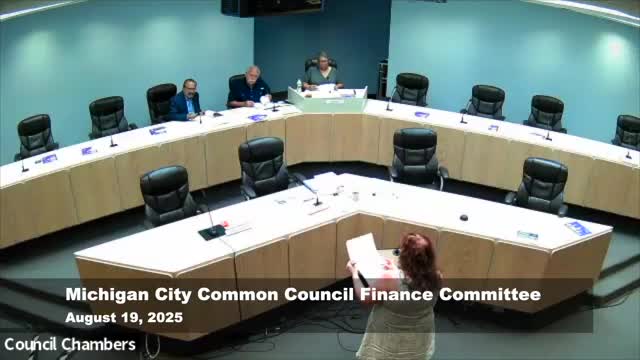
Summary
Michigan City—9s Finance Committee discussed the budgetary risks from Indiana Senate Bill 1 on Aug. 19, 2025, including possible loss of county LIT receipts and consideration of a local wheel tax and other revenue options.
Michigan City—9s Finance Committee spent part of its Aug. 19, 2025, meeting discussing the potential budgetary impact of Indiana Senate Bill 1, including the loss of county-level local income tax (LIT) revenues and the prospect that Michigan City may have to adopt its own local taxes, such as a wheel tax, to replace lost revenue.
Why it matters: Committee members said Senate Bill 1 removes or reduces some county-level LIT receipts the city previously received, and the fiscal effect could grow over time. Those changes could affect funding for police, fire and other public safety services that were previously supported in part by LIT-derived revenue.
City Controller Mary told the committee that revenue forecasts are evolving and that municipal advisers and consulting firm Baker Tilly have prepared summaries on the bill's effect. "Baker Tilly actually came up a little with a really nice summary, and I don't know if that's been given to any of the council people, but I can forward that because they kind of spell it out," Mary said.
Mary said riverboat receipts are already down compared with last year and gave a concrete example: "If I compare from last year, that's a negative 3—we've received $349,000 less than we did last year," she said, referring to receipts from Blue Chip Casino. She warned that the larger concern is the planned phase-out of certain LIT components in 2028, which could further reduce funds available to cities.
La Porte County previously enacted a public-safety LIT that benefited Michigan City in part, the committee was told. Mary said the state-level change means the county—9s LIT receipts will not be available to Michigan City in the same way moving forward; the city may need to consider imposing its own local LIT or other local taxes. "We will have to do this. If we want to enact LIT tax, it'll be at a local level," Mary said.
Committee members asked for clearer materials explaining the changes and how they affect municipal budgets. One member said the topic is confusing to the public and requested a simple, plain-language presentation. Mary agreed to forward the Baker Tilly summary and to provide an explanatory note on what happened to the county LIT and what options the city has, including how the county might respond for shared services.
Discussion vs. decision: The meeting did not adopt any new taxes or pass a revenue ordinance. The committee discussed a wheel-tax resolution that was to be considered by the full council; no formal committee vote on that resolution occurred during this session. The controller identified further analysis as the next step and committed to sharing consultant material with council members.
Next steps: The controller will send the Baker Tilly summary to council members and prepare a plain-language explanation of options, including the mechanics of a city-level LIT or wheel tax and potential interactions with county decisions. Committee members signaled they want a follow-up discussion during the budget workshops.
No public comments on these items were recorded during the meeting.