
Council approves expansion of riverboat district and annual fee for riverfront alcohol license program
Get AI-powered insights, summaries, and transcripts
Subscribe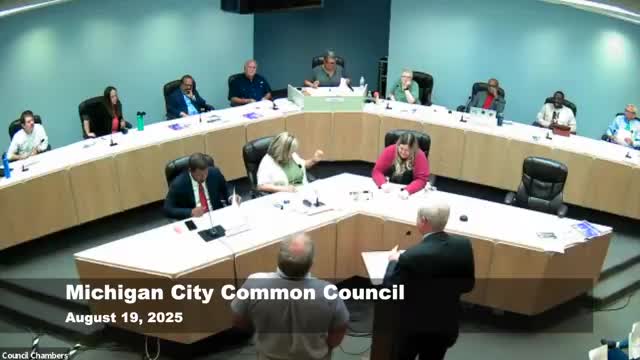
Summary
The council unanimously approved a redevelopment commission–backed resolution expanding the riverfront district covered by the riverboat alcohol license program and implementing a $2,500 annual fee that would fund a new district marketing/operations account.
The Michigan City Common Council voted unanimously on Aug. 19 to approve a redevelopment-commission resolution expanding the local riverfront district eligible for riverboat alcohol licenses and to authorize creation of a small annual fee tied to that program.
Attorney Alan Siernick, representing the Michigan City Redevelopment Commission, told the council that state law expanded eligible riverfront areas in 2019 and that the commission wants local code to reflect that change. “Part of this was created out of that,” he said, describing a statutory expansion to 3,000 feet from the median of Trail Creek and noting that some parcels within the expanded footprint were not covered by the city’s earlier 2008 ordinance.
The resolution approved by the council does two things: it expands the district to reflect the 2019 state guidance and it implements a $2,500-per-license annual contribution for businesses that receive a riverboat alcohol license. The Redevelopment Commission recommended the fee to seed a riverfront fund the council will control; the commission said funds could be used for downtown marketing, dining-district infrastructure and events, and DORA (designated outdoor refreshment area) support, but final allocations require subsequent council action.
Public comment and council discussion focused on scope and use. Resident Paul Presbylinski asked about the geographic extent of the expanded district and how neighborhoods might be affected; public speaker Scott Mellon described the plan as a tool to attract independent restaurants to downtown. Skyler York, director of redevelopment, said the city will publish an online parcel map to let property owners check eligibility and that applicants must still meet zoning and building-code requirements before qualifying for a license.
Action and implementation: Councilwoman Tillman moved adoption; Councilman Prince Belinski (note: transcript names) seconded the motion and the council approved the resolution 9-0. The Redevelopment Commission will next hold a public hearing in September on a confirmatory resolution and the council must adopt an ordinance to formally create the fund and set administrative rules. Attorney Siernick said the $2,500 annual amount was contemplated in the original program and that the council’s approval simply implements what was previously intended.
Ending: The measure formalizes local program rules that the redevelopment commission says will help support downtown dining and events; council members said they expect additional decisions about allocation and administration to return to council in future meetings.