
PSC grants CPCN to ATC for Mill Road–Granville transmission line with conditions and limited route modifications
Get AI-powered insights, summaries, and transcripts
Subscribe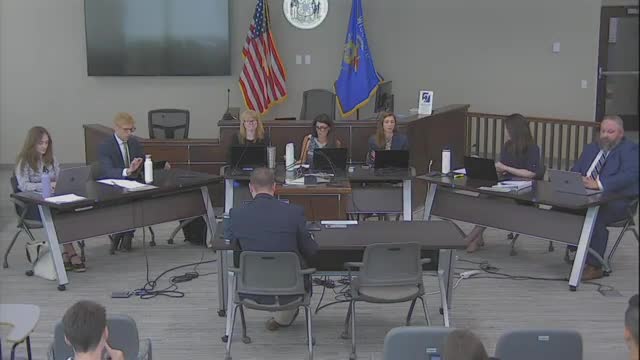
Summary
The Public Service Commission of Wisconsin on Aug. 28 granted a CPCN to American Transmission Company for the Mill Road–Granville transmission line project, approving the preferred route and imposing conditions on routing, environmental protection and follow‑up reporting.
MADISON, Wis. — The Public Service Commission of Wisconsin on Aug. 28 granted a certificate of public convenience and necessity (CPCN) to the American Transmission Company (ATC) for the Mill Road–Granville transmission line project, concluding the project meets statutory need and public‑interest criteria while imposing route‑specific conditions.
Commissioner Hawkins, who led the discussion, said the commission’s decision rested on the applicant’s demonstration of system need and independent reviews by PSC staff and MISO. “Overall, I do support the approval of this application based on the demonstrated need by the applicant and the independent reviews and verifications by both staff and MISO,” Hawkins said.
The project includes new and modified transmission facilities in Milwaukee and Waukesha counties, two new 138 kV transmission lines, replacement of aging facilities, and substation work at four locations including a new Mill Road substation and changes to the Granville, Butler and Tamarack substations. ATC’s preferred route was estimated at $424,000,000; an alternate route was estimated at $449,000,000. The applicant cited a projected in‑service date of October 2027 and anticipated construction beginning in 2026.
The commission found that the project is necessary to address thermal overloads, support generator interconnections and serve new large loads in southeastern Wisconsin while meeting NERC reliability standards. Commissioners said the applicant’s siting process and the environmental assessment conducted with DNR staff demonstrated reasonable efforts to minimize impacts.
Several interveners proposed route modifications aimed at reducing impacts to specific properties. The commission approved one staff‑proposed, property‑specific route shift related to the Fleissner property (removing a street address from the condition language) because the applicant confirmed the shift was feasible and would reduce forest clearing. The commission rejected three intervener‑proposed deviations to common segment E (proposals by MRP and WP) because the changes would increase project costs, affect wetlands to the south and require additional substation and distribution work near the Tamarack Substation.
A public comment from landowners Sandra and Jeffrey Seymour prompted a commission condition requiring ATC to work with the Village of Butler Department of Public Works and other impacted landowners to investigate a southern route across Silver Spring Road; the applicant must report the outcome of those discussions to the commission before construction. If a feasible modification is identified, ATC will either file a minor route adjustment (MRA) or report on feasibility to the commission. Commissioners were divided on whether to require full preconstruction siting analysis; two favored requiring follow‑up reporting and potential MRA filing while another expressed concern about risks to village infrastructure and preferred no additional condition.
DNR‑recommended environmental conditions were adopted, including restrictions and mitigations for wetlands and waterways and a requirement that the applicant conduct presence/absence surveys for a rare plant species along segment K and coordinate avoidance and minimization with DNR if the plant is found. For tree clearing to avoid impacts to nesting birds and roosting bats, the commission adopted the DNR timing restriction language with the added phrase “to the extent practicable,” balancing species protection with construction scheduling needs. The commission also incorporated standard order conditions and slightly modified one condition to address possible post‑construction impacts to line‑of‑sight communications where practicable.
After discussing contested routing, environmental protections and project conditions, the commission voted to grant the CPCN for the Mill Road–Granville project with the conditions described; the vote was recorded as unanimous.
Commissioners said the decision balances regional reliability needs and environmental and property impacts and that staff will oversee preconstruction permitting and any MRAs arising from the required follow‑up steps.