
PSC advances investigation of third‑party aggregators; asks utilities to include cost, data‑sharing and double‑counting plans
Get AI-powered insights, summaries, and transcripts
Subscribe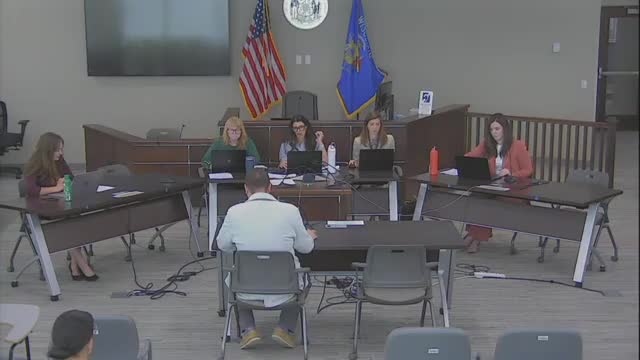
Summary
The Public Service Commission of Wisconsin voted unanimously Aug. 13 to advance an investigation (Docket 5‑EI‑163) into third‑party aggregators’ participation in MISO markets and requested that future utility filings address administrative costs and benefits, communication/double‑counting procedures, and customer data‑sharing practices.
The Public Service Commission of Wisconsin advanced an investigation Aug. 13 into third‑party aggregators (referred to in the record as ARCs) participating on behalf of retail customers in Midcontinent Independent System Operator (MISO) wholesale markets, directing staff and stakeholders to develop further information and filings rather than imposing an immediate, statewide tariff directive.
Chair Strand opened the discussion by tracing the issue’s history and said the commission’s 2009 prohibition on ARCs was later overturned in court. “Because of that court order, our participation is not currently prohibited in Wisconsin,” Chair Strand said, summarizing the legal and administrative backdrop to Docket 5‑EI‑163.
The commission’s request for further work asks future ARC‑related filings from the large, rate‑regulated utilities to include three core components: an analysis of potential administrative costs and benefits of ARC participation within each utility’s service territory; proposed communication practices between aggregators and utilities, including methods to prevent double counting of capacity; and proposed practices for proper sharing of customer data. Commissioners said those three components should address both ARCs that participate through utility programs and ARCs that participate directly at the wholesale level.
The move to advance the investigation followed a staff memo and public comments the commission received after opening the docket Sept. 5, 2024. Chair Strand noted that Wisconsin utilities already operate utility demand‑response programs (direct load control and interruptible tariffs) and said the commission does not need to act in a way that would negate those programs. “This commission specifically is supportive of demand response efforts,” Chair Strand said, citing recent approvals of demand‑response pilots in WEC Energy Group rate cases and direction in a separate Oak Creek combustion‑turbine docket to analyze comprehensive demand responses.
Commissioner Christian Nieto said he favored an approach that encourages participation while allowing utilities flexibility to file when ready. “My number 1 preference is alternative 2,” Nieto said, calling it a measured option that would allow MISO‑level activity to continue while providing parameters for future utility filings. Commissioner Hawkins echoed the emphasis on measured action and added that ARCs can provide price transparency and affordability benefits at the wholesale level: “There is value in the price transparency that ARCs can provide,” Hawkins said.
Board members discussed other options outlined in the staff memo — ranging from taking no further action to directing utilities to file tariffs on a fixed timeline or initiating formal rulemaking — and expressed concern about directing tariff filings before more information and experience are collected. Chair Strand said she opposed expanding ARC participation beyond the four Wisconsin utilities that meet the memo’s criteria (utilities that distributed more than about 4,000,000 MWh the prior year and are rate‑regulated by the commission) and suggested that, if the commission eventually requires filings, a 2028 deadline would be preferable to an earlier 2026 timeline discussed in the memo.
After discussion and clarifying edits to the three required filing components (costs/benefits, communication/double‑counting, and customer data sharing), Commissioner Nieto moved to advance the investigation “pursuant to our discussion today.” Commissioner Hawkins seconded the motion; the commission voted in favor.
The action advances Docket 5‑EI‑163 to the next stage of the investigation and asks staff to solicit further comment and for utilities to prepare filings that address the commission’s three components when they are ready. The order does not impose a temporary prohibition on ARC participation nor does it adopt a binding statewide tariff at this time. It leaves open the possibility of future rulemaking or directed filings depending on what the record and subsequent analysis show.
Background: The issue emerged after FERC orders in 2008–2009 authorized third‑party aggregators to participate in wholesale markets, subject to state regulatory choice. The commission issued a temporary prohibition on ARCs in 2009; that prohibition was later invalidated by appellate court decision in May 2024. The PSC opened the current investigation Sept. 5, 2024 (Docket 5‑EI‑163) and sought comments, to which utilities, aggregators and other stakeholders responded. The commission’s staff memo summarized those comments and outlined alternatives, including no action, directed filings, and rulemaking.
What comes next: Staff will proceed consistent with the commission’s direction to advance the investigation and to request additional input and filings addressing the three components the commissioners outlined. The commission left timelines flexible, signaling a preference among members to prioritize additional study, potential pilots or voluntary utility filings before requiring firm statewide tariff changes.