
Commission approves deferral of NSPW’s $9.6 million 2025 excess liability insurance expense; denies carrying costs
Get AI-powered insights, summaries, and transcripts
Subscribe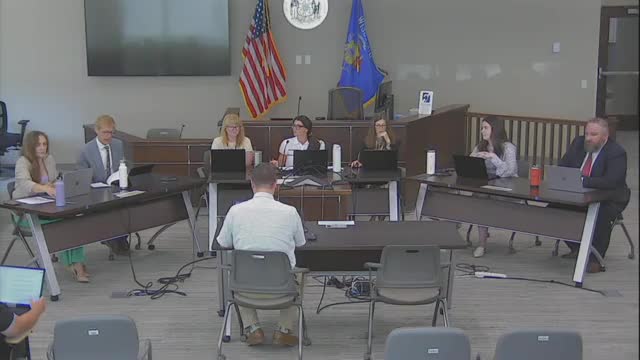
Summary
The Public Utilities Commission on Aug. 7 approved Northern States Power Company of Wisconsin’s request to defer $9,600,000 of 2025 excess liability insurance expense as a regulatory asset until a future rate proceeding but did not authorize carrying costs on that deferred balance.
The Public Utilities Commission on Aug. 7 approved Northern States Power Company of Wisconsin’s request to defer $9,600,000 of 2025 excess liability insurance expense as a regulatory asset until a future rate proceeding but did not authorize carrying costs on that deferred balance.
Chair Strand, presiding, said the request was narrowly for deferral accounting and was not a decision on cost recovery or the reasonableness of the company’s insurance expenditures. “This request is only a request for deferral. This is not a cost recovery decision, nor is it a determination on the reasonableness of the applicants insurance cost expenditures,” Strand said, adding that any recovery would be reviewed in a later rate proceeding.
The commission majority cited a recent, sharp increase in excess liability premiums for NSPW: the premium more than doubled in 2023 and rose another 400% in 2024, which the commission said represented roughly $9,300,000 of the change. Commissioners said roughly 90% of that $9.3 million increase is driven by wildfire-related claims across the utility industry, although NSPW has not reported wildfire claims of its own.
Nut graf: Commissioners found the increase unusual, largely outside the utility’s direct control, and material, and therefore appropriate for deferral accounting under the accounting policy guidance discussed in the meeting. They declined to allow carrying costs because the timing of any rate proceeding that would address recovery remains unclear.
In discussion, Strand noted the commission’s evaluation relies on an accounting policy statement of position known in the record as SOP 94-01 and related criteria: whether the cost is outside the utility’s control; whether it is unusual and infrequent; whether immediate recognition would materially distort income or cause serious financial harm; and whether it would significantly impact ratepayers. Strand said NSPW “adequately addressed the criteria from SOP 94-01” and cited the company’s steps to control risk, including replacing old wood poles and creating a wildfire mitigation plan.
Commissioner Nieto agreed with the outcome to approve deferral and deny carrying costs. Nieto said, “We do have to be careful with these deferral requests,” and explained that while materiality alone does not prove serious financial harm, the combination of the company’s prior stay-out agreement and the unexpected $9.6 million addition made the request extraordinary and appropriate for deferral.
Commissioner Hawkins likewise supported approving the deferral and not authorizing carrying costs, saying the cost increase was “outside of the utilities control” and “unusual and infrequent.” Hawkins cited the underlying stay-out proceeding as relevant to the commission’s decision on carrying costs and noted uncertainty about the timing of any rate case that would resolve recovery.
The commission also noted that NSPW had requested carrying costs at the utility’s weighted cost of debt of 2.23% (as referenced in the record from docket 04/1926) but declined to authorize carrying costs because it could not determine how long the expense might need to be carried before a rate proceeding would address recovery. The chair also said NSPW filed comments outside the filing window and the commission would not take notice of those comments at this time.
Separately, the commission approved routine consent items earlier in the meeting, including approval of the open meeting minutes from July 24, 2025; various notices of investigation and proceeding associated with agenda items 2–24; and an action authorizing Wisconsin Power and Light Company to recover its 2024 fuel costs and deferred account balance on a class-level allocation method and to reconcile that balance over the three-month period from October through December 2025.
Discussion vs. decision: The commission’s approval is an accounting deferral only; it does not bind the commission to allow recovery of the deferred $9.6 million in any future rate case. The commission took formal action to approve the deferral (motion moved and seconded and approved) and separately declined to approve carrying costs.
Ending: The commission recorded the vote as unanimous on the motion to approve the deferral and not to authorize carrying costs. No public commenters participated on this docket during the open meeting; commissioners indicated further review of recovery would occur in a later rate proceeding. The commission adjourned and scheduled its next open meeting for Aug. 13, 2025, at 10:30 a.m.