Senate hearing urges multiyear NASA authorization, warns U.S. risks losing leadership in space
Summary
Senators and witnesses at a Senate Commerce Committee hearing urged Congress to pass a multiyear NASA authorization and maintain Artemis and ISS funding, saying delays or funding uncertainty risk ceding strategic advantages to China and would harm U.S. industry and research.
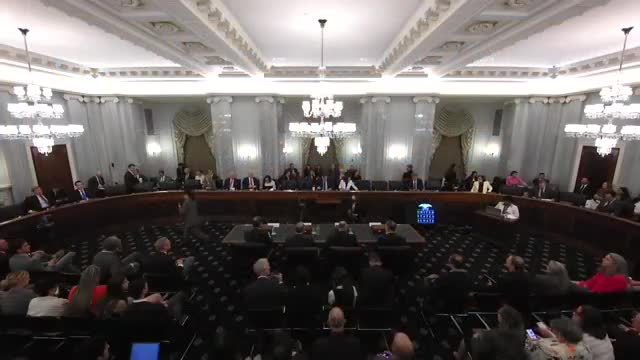
At a Senate Commerce, Science, and Transportation Committee hearing, senators and industry and military witnesses urged Congress to pass a multiyear NASA authorization to sustain the Artemis program, the International Space Station and related industrial activity. "There exists a strong bipartisan consensus in Congress for backing the critical mission of NASA," said Senator Ted Cruz, the committee chairman. "We are in a new space race with China."
Why it matters: Witnesses said sustained, predictable funding is needed to preserve U.S. diplomatic, economic and security advantages tied to space programs and to keep the industrial base intact. Alan Cutler, president and CEO of the Coalition for Deep Space Exploration, told senators, "This is a race that The United States cannot afford to lose." Michael Gold, president of civil and international space for Redwire, warned that without congressional and agency action "we run the risk of reducing the number of American astronauts on the ISS from 4 to 3, and then down to 2." That, he said, would for the first time put more Chinese astronauts in space than Americans if trends continue.
Most important facts: The hearing repeatedly linked congressional authorization and appropriations to the continuity of Artemis missions and ISS operations. Multiple witnesses urged a multiyear authorization to provide certainty to suppliers and international partners. Jim Bridenstine, managing partner of the Artemis Group and former NASA administrator, and others cited the extra funding provided in what witnesses repeatedly called the "1 Big Beautiful Bill," including a $10 billion supplement for NASA human spaceflight that witnesses said was critical to Artemis momentum. Several senators also warned that continuing resolutions (CRs) or abrupt budget changes create supply-chain and workforce churn: Cutler told the committee Artemis depends on "2,700 suppliers" and that unstable funding forces companies to consider alternative employment or pause work.
Discussion vs. decisions: The hearing produced no formal legislative vote. The committee admitted an article from Air & Space Forces magazine into the record without objection and set administrative deadlines for questions from senators and written responses by witnesses. Senators pressed witnesses for specific risks from budget uncertainty and asked for written follow-up on procurement and regulatory impediments.
Less urgent details: Senators from both parties emphasized STEM benefits, small-business participation in supply chains, and the need to avoid a capability gap in low Earth orbit. Committee members also pressed witnesses on the need for better launch capacity and for a national "grand strategy" that coordinates civil, commercial and defense efforts.
Ending note: Witnesses and senators left the committee with a shared sense of urgency to pass longer-term authorization and appropriations to prevent program instability and to maintain U.S. leadership in space.