
Residents, council debate fairness of Logansport Utilities stormwater fees as city faces $180,000 annual charge
Get AI-powered insights, summaries, and transcripts
Subscribe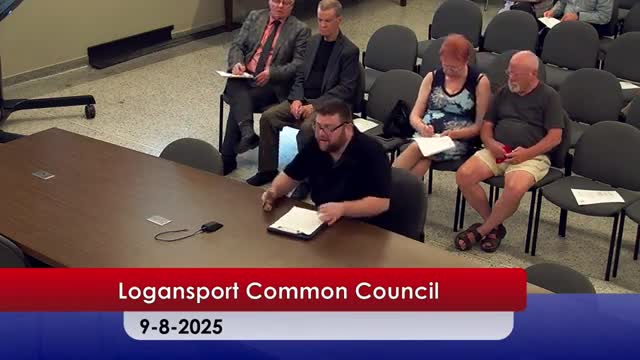
Summary
Business owners and residents urged the Logansport Common Council and Logansport Utilities to reconsider how stormwater fees are calculated after the utility notified the city it will begin billing municipal properties about $180,000 a year; public speakers called for clearer categories, transparency and a study of alternatives.
Joseph Stackhouse, a Logansport business owner and utility ratepayer, told the Logansport Common Council on Sept. 8 that current stormwater fees are “not based on any actual impact a property might have” and warned the city’s bills will rise after Logansport Utilities said it will start charging municipal properties an estimated $180,000 a year.
The matter matters because the utility’s fee structure directly affects residents’ bills and the city budget: Stackhouse told council members that at the stormwater board meeting he learned the city’s new liability would amount to “about a $180,000 a year. That’ll be about a million bucks in about 5 years’ time.” He urged council action to create relief for small businesses and to define an “other” rate category more clearly so it cannot be applied without standards.
Stackhouse said the present fee phases were enacted by ordinance (cited in meeting discussion as ordinance 2022-50) and that the ordinance contains no sunset provision, meaning rate increases could continue indefinitely unless the council reconsiders them. He urged a short-term fix — for example, a small-category discount for businesses with footprints under 1,000 square feet — while recommending a broader study to redesign the rate structure.
Lawyer and longtime resident Jim Brew addressed the council after Stackhouse and framed the fee as a tax-like charge created by statute and local ordinance, saying, “the storm water is a taxation” and urging the council to treat changes as legislative matters that require study and public process. Brew also praised prior council work that established the utility service board and urged measured review.
Council members said they had discussed the issue with utility leadership after Stackhouse’s earlier presentation to the utility service board. Councilman Dave Morris said he had spoken with the utility superintendent and that staff were “looking at some options,” and encouraged Stackhouse to continue working with utility staff on specifics. Council members acknowledged the loans and state revolving fund (SRF) financing that created a long repayment horizon — Stackhouse and council discussion referenced roughly $40 million in SRF borrowing and a 30-year repayment window — and said those constraints limit immediate options but do not preclude changes to how fees are assessed.
Stackhouse also urged greater transparency from the utility, asking that Logansport Utilities record and archive its meetings. He said state legislators he consulted “recommended that Logansport Utilities should probably be recording their meetings,” and suggested low-cost recording options are available.
Council members and staff promised follow-up: utility leadership had been alerted and council members said they would ask staff and the utility to return with options, including clearer definitions for special-case rate categories and whether a narrower category for small commercial properties could be created quickly while a full rate study is completed.
The council did not take a formal vote on changes to the stormwater rate structure during the meeting; speakers asked the utility and the council to review existing ordinance language and to report back with options and possible timelines for a study or targeted revisions.