
City briefed on plan to convert Strawberry Valley water for municipal use under 1920 agreement
Get AI-powered insights, summaries, and transcripts
Subscribe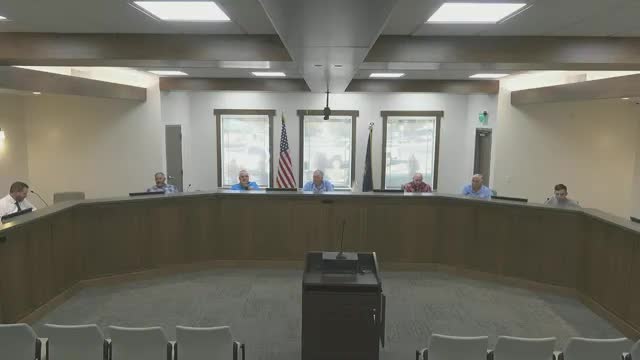
Summary
City staff and an outside engineer briefed the San Joaquin City Council on a regional effort to convert Strawberry Valley Project water from agricultural use to municipal and industrial use under a 1920-era federal conversion pathway; no council vote was taken, and staff will bring a draft local resolution to the council for consideration.
San Joaquin city officials were briefed Sept. 2 on a regional effort to convert water from the Strawberry Valley Project from agricultural use to municipal and industrial (M&I) use under a conversion approach tied to a 1920-era miscellaneous-purposes agreement. The briefing explained how converted shares could be delivered through the ULS (pressurized) pipeline and used by the city once local approvals and infrastructure exist.
The conversion effort, described by consultant Chris Thompson of Hansen, Allen & Luce, would detach certain Strawberry water rights from specific farm parcels so those water shares can be converted and transferred into municipal systems. Thompson said a near-final agreement under a federal 1920 miscellaneous-purposes mechanism is scheduled for initial signings by participating entities on Sept. 18 and that the agreement will allow conversion of Strawberry water to M&I use where authorized.
Why it matters: Council members were told Strawberry water is relatively abundant and high-quality compared with some local groundwater sources, is delivered at pressure on the ULS pipeline, and could provide “wet water” for growth and dry-year reliability. San Joaquin already holds 908.5 acre-feet of ULS-class water; the conversion process would let the city accept additional converted shares from other landowners in the Strawberry Valley Project service area and deliver them into the city water system through the pipeline.
Thompson summarized how the conversion works and what the city would need to do administratively. He said the project team is asking cities to adopt a template resolution that would authorize an administrative signatory (or signatories) to approve individual third-party conversion agreements that conform to the statewide form. The intent of that administrative pathway is to avoid sending every conversion agreement to a full council vote while preserving oversight: a local official would check each agreement for conformance before acceptance.
The city’s staff and council asked practical questions about costs and controls. Council members and staff noted permanent assessment obligations tied to converted shares: irrigation companies will continue to receive assessment payments on converted shares to meet a 1920s-act requirement that conversions not injure remaining irrigation users. Thompson and staff said those perpetual assessments are likely small relative to the value of the delivered water but must be built into local financial planning. As an administrative safeguard, several council members asked that the local resolution designate two signatories (for example, the city manager and the city engineer) rather than a single designee.
On timing and infrastructure, staff said the ULS pressurized pipeline is being completed this year and the city will be able to test delivery next year. Thompson added that potable use would require the planned Salem-area water-treatment plant, which is still in environmental review and design; he said the treatment project has been described to the council as a multibillion-dollar undertaking and that potable delivery would follow construction and regulatory approvals. In the interim, converted Strawberry shares could be used for pressurized irrigation delivered through the ULS pipeline sooner than potable conversion.
What the council will see next: Staff told the council they will draft a local resolution using the template the project team circulated and place the resolution on the council agenda for consideration (staff indicated the resolution would be on the council agenda within two weeks). No formal council action on the conversion mechanism or the template resolution was taken Sept. 2.
Direct quotes (from meeting): “This contract has been drawn up. It’s in near-final form right now and a date has been set for September 18 for all the initial signers of that agreement to sign it,” said Chris Thompson, engineer, Hansen, Allen & Luce. Norm (city staff) said of the technical team, “He’s the smartest water guy that I know,” referring to Thompson and praising the work that led to the conversion approach.
Bottom line: The meeting provided a technical briefing and initial local policy options; council members asked for two-signature administrative controls and for staff to bring a drafted resolution for formal consideration. The conversion pathway will require multiple third-party agreements and continued coordination with the Strawberry Valley Project, irrigation companies, Central Utah Water Conservancy District, and the entity building the potable-treatment plant.