
Oak Park D97 presents tentative budget showing modest revenue growth, reserves intact
Get AI-powered insights, summaries, and transcripts
Subscribe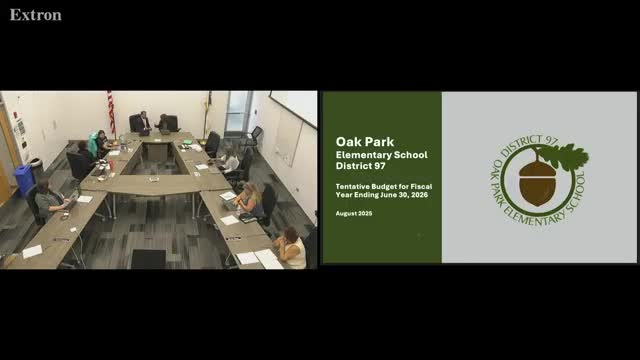
Summary
District 97 administrators presented a tentative 2025–26 budget showing a small projected revenue increase, higher expenditures driven by salaries and benefits, and fund balances near the district's policy range; a public hearing is scheduled for Sept. 16.
Oak Park Elementary School District 97 administrators presented a tentative 2025–26 budget to the Board of Education on Aug. 12, projecting a small revenue increase but larger growth in expenses and recommending continued attention to fund balance reserves. The presentation, delivered by Rob Grossi, a longtime consultant to the board, and Dr. Crystal Leroy, the district's newly appointed chief financial officer, outlined preliminary fiscal-year results and a tentative budget the board will consider at a public hearing on Sept. 16. Grossi said a notice will run in the newspaper by Aug. 15 and that the district will meet with the district's finance advisory group (FORC) on Aug. 26 for comment before the hearing. Why it matters: the tentative budget affects tax levy planning, long-range capital work and staffing. District officials said the budget aims to maintain programs while holding fund balance within the board's 3-to-6-month target. Key points from the presentation: - Preliminary cash-basis results for the fiscal year that ended show beginning cash of about $44.2 million, total revenues of roughly $129.7 million, total expenditures of about $122.1 million and ending cash of about $51.8 million. - The district reported investing about $2.0 million in capital projects and increasing fund balances by about $7.6 million year over year; administrators said the district now holds roughly 155 days of reserves. - For the tentative 2025–26 budget, administrators projected revenues to increase by roughly $498,000 (about 0.3 percent) while total expenditures are projected to rise about $7.0 million (about 7.1 percent overall; about 4.5 percent excluding capital). Grossi said the primary expenditure drivers are salaries and benefits, which together comprise about 75 percent of district spending. - Major budget assumptions highlighted: a projected salary increase of about 4 percent across staff, a 5.5 percent rise in employee benefits, $4.0 million planned for capital projects and continued reliance on property tax revenue (about 79 percent of district revenue). - Revenue sensitivities discussed include the district's constrained tax growth under Cook County limits tied to CPI, uncertainty in federal grants, and variation in corporate personal property replacement tax receipts. Discussion and next steps: Grossi told the board the district finished the last year better than anticipated, but warned that slower growth in real estate tax revenue tied to CPI will compress future surpluses unless expenses are constrained. He recommended ongoing scenario planning and quarterly reporting to let the board see trends before more difficult decisions become necessary. Board members asked for five-year projections under best-, realistic- and worst-case scenarios and sought clarity on how the district's fund balance policy (3-to-6 months) should guide future capital and levy choices. Dr. Leroy said the administration will file the adopted budget with the Illinois State Board of Education after board action and will return with additional details, quarterly reports and five-year scenarios after the audit is final.