
Public commenter urges ethics commission to end confidential letters and limit law‑firm conflicts
Get AI-powered insights, summaries, and transcripts
Subscribe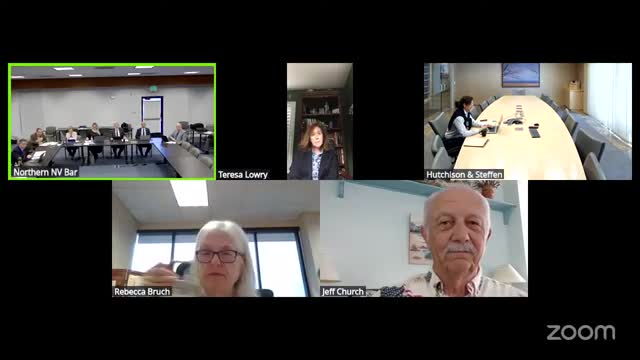
Summary
Jeff Church, a public commenter, told the Nevada Commission on Ethics the practice of issuing confidential letters of instruction and frequent recusals tied to a particular law firm reduces transparency and urged broader disclosure of officials’ benefits.
During the commission’s public comment period, Jeff Church of renotaxrevolt.com and watchdogjeff.com told the Nevada Commission on Ethics that the agency’s practice of issuing confidential letters of instruction and recurring recusals linked to a large law firm prevents public scrutiny.
Church said he frequently sees an attorney from the firm McDonald Carano recuse herself because the firm represents many state and local clients, and he urged the commission to change that practice so commissioners and the public can have a full review. He also criticized the commission’s use of confidential letters of instruction and urged the commission to publish those determinations so voters and other officials know when disclosure or abstention issues arise.
“You’re either guilty or you’re not,” Church said in part during his first appearance in the meeting’s public‑comment period, arguing that the commission’s practice of issuing confidential letters sends a mixed message to the public and allows apparent conflicts to persist. He asked the commission to stop confidential letters of instruction and to require officials to disclose benefits such as health‑care coverage in their public filings with the Secretary of State.
Church returned at the end of the meeting to reiterate his position, suggesting the commission ask reporting parties and respondents to waive confidentiality if they are comfortable doing so, which he said would allow the commission to provide more public information without violating statutory confidentiality rules.
Commission staff said they will consider confidentiality questions and consult with commission counsel to determine whether the commission’s statutes permit broader disclosure or routine referral of possible criminal activity discovered during confidential investigations.