Nevada ethics commission vacates deferral agreement for Reno council member Devon Reese
September 08, 2025 | Commission on Ethics, Independent Boards, Commissions, or Councils, Organizations, Executive, Nevada
This article was created by AI summarizing key points discussed. AI makes mistakes, so for full details and context, please refer to the video of the full meeting. Please report any errors so we can fix them. Report an error »
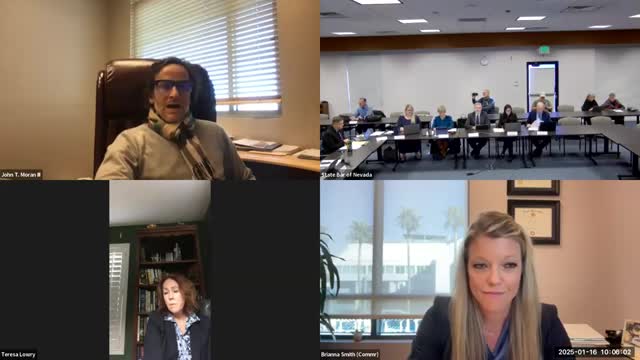
The Nevada Commission on Ethics voted on Jan. 16, 2025, to find that Reno City Council member Devon Reese failed to comply with the terms of a deferral agreement he signed in April 2023 and to vacate that agreement, referring the matter for further proceedings before the commission.
The commission’s executive director, Ross Armstrong, told commissioners the review panel had determined there was just and sufficient cause to proceed on a new complaint that included conduct occurring after Reese entered the deferral agreement. “If you don’t do anything in response to that violation ... then Mr. Reese will have no violation in that previous case,” Armstrong said, urging the commission to vacate the agreement so the full commission can decide whether a violation occurred.
The deferral agreement at issue required Reese to complete ethics training, implement a conflicts‑check process, submit disclosures when items involving his firm appeared before a public body, and otherwise comply with Nevada’s ethics law (chapter 281A of the Nevada Revised Statutes). Armstrong told the panel that Reese completed the required training in May 2023 but that two later trips producing private benefit — described in the investigation as totaling in excess of $1,300 — were the basis for new complaints filed in March and April 2024. A review panel determined in September 2024 that those complaints contained conduct occurring after the deferral agreement and had sufficient cause to proceed.
Jonathan Shipman, attorney for Mr. Reese, urged the commission not to reopen the deferred matter. He argued the deferral agreement had resulted in corrective steps — training, conflicts‑checking processes and routine disclosure — and that because the other pending matters remain unadjudicated they should be handled on their own merits. “So I would argue that the deferral agreement is not a gift. It worked,” Shipman said.
Vice Chair Wallen moved that the commission find Mr. Reese failed to comply with the deferral agreement, to vacate the agreement and to conduct further proceedings; Commissioner Moran seconded. The motion passed, with the commissioners present voting yes and Commissioner Lowry abstaining because she served on the review panel for this matter. The chair of the commission and the acting commission counsel confirmed procedural disclosures and several members recused earlier in the discussion for prior involvement.
Commission discussion focused on (1) whether the review panel’s finding that the new complaint included post‑agreement conduct was sufficient to trigger the deferral‑agreement violation clause and (2) the practical effect of vacating the agreement before the other pending matters are adjudicated. Supporters of vacating the agreement said the deferral agreement’s purpose is compliance and that a review panel finding of just and sufficient cause is the contract trigger. Opponents said reopening the earlier matter risks duplicative use of resources and that the pending matters should be adjudicated independently.
The commission’s action vacates the April 2023 deferral agreement and sends the previously deferred matter back into formal proceedings before the commission. Staff indicated that related cases that remain pending will proceed on their own schedule; no formal sanctions were imposed at the January 16 meeting.
A recusal note: Commissioner Lowry did not participate in the vote because she served on the review panel that considered the later complaint. Commission counsel Bassett also did not participate in parts of the discussion because of prior involvement; senior deputy attorney general Lehi St. Jules acted as commission counsel for the item.
Background and next steps: Armstrong said the review‑panel finding and the timeline (deferral agreement April 2023; training May 2023; complaints filed March–April 2024; review‑panel decision Sept. 2024) were the basis for his recommendation to vacate. The commission’s vacatur creates an opportunity for a full adjudicatory proceeding in which the commission will take evidence and determine whether the allegations amount to violations of NRS chapter 281A.
For transparency, the parties agreed a set of demonstrative exhibits would be made part of the record. The commission did not set a hearing date at the Jan. 16 meeting; staff said scheduling for related pending matters could occur in the first half of 2025.
The commission’s executive director, Ross Armstrong, told commissioners the review panel had determined there was just and sufficient cause to proceed on a new complaint that included conduct occurring after Reese entered the deferral agreement. “If you don’t do anything in response to that violation ... then Mr. Reese will have no violation in that previous case,” Armstrong said, urging the commission to vacate the agreement so the full commission can decide whether a violation occurred.
The deferral agreement at issue required Reese to complete ethics training, implement a conflicts‑check process, submit disclosures when items involving his firm appeared before a public body, and otherwise comply with Nevada’s ethics law (chapter 281A of the Nevada Revised Statutes). Armstrong told the panel that Reese completed the required training in May 2023 but that two later trips producing private benefit — described in the investigation as totaling in excess of $1,300 — were the basis for new complaints filed in March and April 2024. A review panel determined in September 2024 that those complaints contained conduct occurring after the deferral agreement and had sufficient cause to proceed.
Jonathan Shipman, attorney for Mr. Reese, urged the commission not to reopen the deferred matter. He argued the deferral agreement had resulted in corrective steps — training, conflicts‑checking processes and routine disclosure — and that because the other pending matters remain unadjudicated they should be handled on their own merits. “So I would argue that the deferral agreement is not a gift. It worked,” Shipman said.
Vice Chair Wallen moved that the commission find Mr. Reese failed to comply with the deferral agreement, to vacate the agreement and to conduct further proceedings; Commissioner Moran seconded. The motion passed, with the commissioners present voting yes and Commissioner Lowry abstaining because she served on the review panel for this matter. The chair of the commission and the acting commission counsel confirmed procedural disclosures and several members recused earlier in the discussion for prior involvement.
Commission discussion focused on (1) whether the review panel’s finding that the new complaint included post‑agreement conduct was sufficient to trigger the deferral‑agreement violation clause and (2) the practical effect of vacating the agreement before the other pending matters are adjudicated. Supporters of vacating the agreement said the deferral agreement’s purpose is compliance and that a review panel finding of just and sufficient cause is the contract trigger. Opponents said reopening the earlier matter risks duplicative use of resources and that the pending matters should be adjudicated independently.
The commission’s action vacates the April 2023 deferral agreement and sends the previously deferred matter back into formal proceedings before the commission. Staff indicated that related cases that remain pending will proceed on their own schedule; no formal sanctions were imposed at the January 16 meeting.
A recusal note: Commissioner Lowry did not participate in the vote because she served on the review panel that considered the later complaint. Commission counsel Bassett also did not participate in parts of the discussion because of prior involvement; senior deputy attorney general Lehi St. Jules acted as commission counsel for the item.
Background and next steps: Armstrong said the review‑panel finding and the timeline (deferral agreement April 2023; training May 2023; complaints filed March–April 2024; review‑panel decision Sept. 2024) were the basis for his recommendation to vacate. The commission’s vacatur creates an opportunity for a full adjudicatory proceeding in which the commission will take evidence and determine whether the allegations amount to violations of NRS chapter 281A.
For transparency, the parties agreed a set of demonstrative exhibits would be made part of the record. The commission did not set a hearing date at the Jan. 16 meeting; staff said scheduling for related pending matters could occur in the first half of 2025.
View the Full Meeting & All Its Details
This article offers just a summary. Unlock complete video, transcripts, and insights as a Founder Member.
✓
Watch full, unedited meeting videos
✓
Search every word spoken in unlimited transcripts
✓
AI summaries & real-time alerts (all government levels)
✓
Permanent access to expanding government content
30-day money-back guarantee
