
County moves to package bridge and culvert projects for state flex grants
Get AI-powered insights, summaries, and transcripts
Subscribe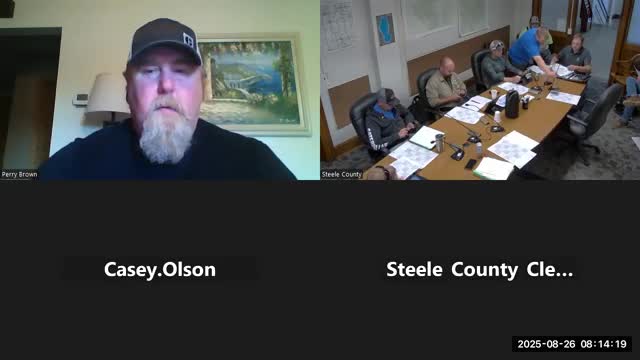
Summary
County commissioners and staff agreed to have county staff prepare up to five flex-grant applications by the Sept. 19 deadline, prioritizing clusters of minor bridges and culverts and coordinating township submittals. No formal funding commitments were approved at the meeting; staff will return with final applications for the board’s approval.
County commissioners met in a special session Aug. 26, 2025, and directed staff to prepare multiple applications to the state’s LEHI flex-fund program for bridge, culvert and selected road projects, with materials due Sept. 19.
The applications will bundle minor-structure work — non‑federally inspected bridges and culverts — into several packages so the county can present “bid‑ready” projects for the state review panels, county staff said. The packages would also incorporate township-submitted projects; townships must submit projects through the county and the county must sign a letter acknowledging those township applications.
County staff said the program operates as a reimbursement grant and that counties often must pay costs up front and submit receipts to the state for repayment. “There’s two opportunities for grant money here, but you have to apply upfront at the same time in order to be eligible,” county staff member Ben said. He told commissioners the board should expect a single application deadline and two possible funding paths: the flex‑fund awards and a later distribution from set‑aside (prairie dog) monies if those buckets become available.
Why it matters: The county previously received a one‑time prairie‑dog distribution of roughly $1.65 million in the last biennium. Staff said the direct distribution this cycle, if available, would be about $555,000 — far less than the prior amount — because legislators shifted much of the former direct distribution money into competitive flex grants. The flex program’s statewide bucket is large but competitive; staff said the total program pool is on the order of hundreds of millions statewide and projects will be ranked by a state committee and DOT management.
Key details and discussion points
- Deadline and timing: Applications are due Sept. 19; staff told the board the state expects to notify awardees by late calendar year or early January. Commissioners asked staff to prepare applications in time for the board packet prior to the next regular commission meeting so the board can give final approval before submission. - Minimum project size and scoring: Staff said the legislature set a $250,000 “minimum” project size as guidance but that the state indicated it would not automatically reject smaller requests. The scoring criteria favor projects with local cost share (higher points for local funding greater than 50 percent). The DOT will apply a scoring rubric and a management group may alter rankings afterward. - Township role and reimbursement risk: Townships may apply, but the state routes funds through counties; county staff must sign township submissions. Staff warned that because the grants reimburse after work is completed, the county (or township) may need to front costs during the reimbursement process. - Application strategy: Staff proposed dividing the county geographically and filing multiple applications (about three to five packages were discussed) so the county has several chances to secure funding. Commissioners and staff discussed grouping “red” (poorest condition) structures and blending culvert replacements and minor bridge repairs within packages. Staff emphasized selecting projects that improve connectivity or remove a bridge altogether when that is feasible, since the state has said it will prioritize funding certain removals and high‑need bridges. - Cost share options discussed: Commissioners and staff debated cost‑share scenarios (examples discussed included 90/10 or 80/20 splits for culverts and bridges). No formal county funding commitment was approved at the meeting; staff will present draft applications and any proposed county match for formal commission approval.
Township project summaries
Staff summarized township intentions and local project ideas that the county would bundle with county applications: Easton Township is considering regrading roughly two miles where a removed bridge left a washed‑out crossing; Hugo Township seeks culvert replacement and slope work on a short crossing that staff said has a known hydraulics study; Edendale reported a bank‑stabilization safety project; Melrose listed railroad crossing and gravel‑surfacing requests. Staff said some townships already provided cost estimates or maps and that the county will follow up to produce consistent cost estimates for application packages.
Outcomes and next steps
Commissioners directed staff to assemble application packages — focusing on clustered minor bridge and culvert projects — and return the completed drafts for the board’s review before submission. Staff will also continue collecting township materials, maps and cost estimates to build “bid‑ready” packages. No formal motion or vote on county matching amounts was recorded; the board will consider any proposed cost share when it reviews the draft applications.
Ending note
Staff recommended a pragmatic approach: submit a limited number of strong, well‑documented applications rather than many unfunded requests. Commissioners indicated they preferred that approach and asked staff to present draft applications in the next commission packet so the board can sign off before the Sept. 19 deadline.