
Landowners press county over blocked section-line access; county urges legal clarification
Get AI-powered insights, summaries, and transcripts
Subscribe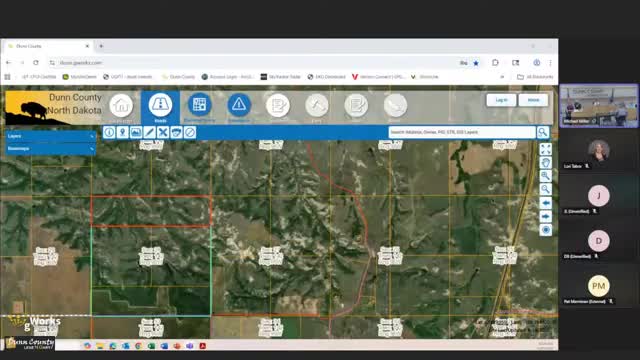
Summary
A group of producers asked the commission to improve a roughly one-mile section line to restore livestock access. County staff and the county attorney said the right-of-way status is unclear and recommended civil court action to establish easement rights before the county undertakes improvements.
A group of Dunn County landowners requested county assistance to improve a roughly one-mile section-line route used for livestock access, but county staff and the county attorney told the commission the legal status of the path is unclear and that the dispute will likely require a civil court determination before the county expends public funds.
Roger Katamus (resident/producer) and other producers told the commission they purchased or leased adjoining land and now cannot reliably move animals in and out because a historic route was gated and, they say, effectively closed. Katamus described the route as approximately one mile long, used historically as part of the old Oakdale–Fayette stagecoach alignment, and bordered by double gates and culverts in places. He said attempts to use alternative routes were impractical and that the principal need was “to get a pickup and trailer into there to retrieve a sick animal.”
Commissioners and staff described the site as rough Badlands terrain that would require culverts, grading and other improvements; officials also warned that improvements would likely erode without appropriate drainage work. Pat (staff member) — who had researched the property record and submitted a memo to the board — told commissioners that proving a prescriptive easement or other legal right of use in North Dakota is difficult and usually requires a court action (quiet-title or declaratory judgment) to define rights and responsibilities.
County staff said some culverts and limited assistance could be provided in certain locations, but most commissioners said they were reluctant to authorize larger improvements while the legal status of the route remained unresolved. Commissioner Heizer and others noted concerns about setting a precedent if the county began improving historic or disputed routes without a documented easement. Several landowners said parts of the alignment showed evidence of past public or company investments (culverts, a small bridge and truck load-out areas) and that some neighbors had relied on the road for decades.
Ending: Commissioners asked the landowners to pursue legal clarification of the right-of-way and offered that county staff can provide technical specifications and limited materials (for example culverts) where feasible, but the commission made no formal vote to fund major improvements at this meeting.