
Biloxi council deadlocks on authorizing advertisement of proposed three‑mill property tax increase
Get AI-powered insights, summaries, and transcripts
Subscribe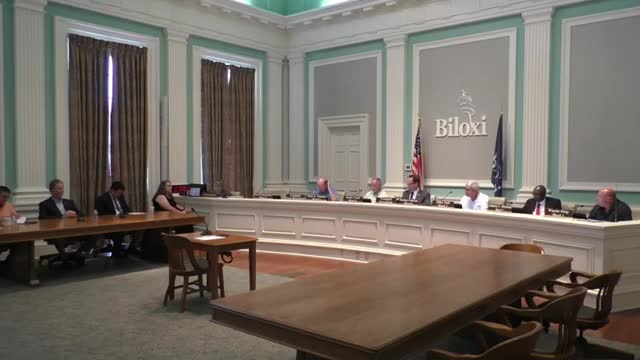
Summary
A motion to let the mayor advertise a proposed three‑mill increase that city officials say would raise about $2 million failed on a 3‑3 vote with one abstention after hours of budget discussion and debate over using fund balance or targeted spending cuts.
The Biloxi City Council failed to authorize the mayor to advertise a proposed three‑mill increase in the city’s property tax rate, splitting 3‑3 with one abstention after a special meeting focused on the fiscal 2026 budget and options to close a projected revenue‑to‑expense gap. The proposed increase would have raised the city millage from about 30.1 mills to about 33.1 mills and was described by city staff as yielding roughly $2,000,000 in additional annual revenue.
The outcome leaves the council without authorization to run the statutorily required public notice that would trigger a public hearing; city officials had identified a Sept. 2 meeting as the planned public hearing date if the council approved advertising. “The 3% mill would generate about $2,000,000 worth of revenue, which would reduce that difference between revenues and expenses,” the mayor said during the meeting.
Why it matters: Council members and staff said the city faces a recurring gap between approved expenses and forecasted revenues and that roughly 70% of general fund spending is personnel costs. Backers of the advertisement argued that the additional revenue would protect service levels and the city’s financial rating; opponents and skeptics pushed for deeper expense cuts, reallocation of existing fund balances, or clearer commitments to use any new revenue for economic development rather than only operations.
Most of the council’s substantive debate addressed where any new revenue would be used and whether the council should first pursue cuts or accounting moves. Councilman Tisdale pressed staff on fund balances and the composition of city funds, asking for clarification on general‑fund unrestricted balance (reported in discussion as roughly $12.1–$12.5 million) and a larger ‘‘all funds’’ figure cited in the audit (discussed as about $26 million). City finance staff said they would follow up with exact account breakdowns. Tisdale also asked whether specific capital projects — including Oak Street Pier and the Popsbury extension — would require local matches and clarified that some port projects would be on the port authority’s budget rather than the city’s.
Opponents of immediate advertisement questioned whether the city should use fund balance or further reduce nondepartmental spending instead of raising taxes. Councilor Shoemaker said he was reluctant to support a millage increase this year and urged additional internal cuts and consolidation (for example, combining engineering and public works leadership). “I just think we can find some other areas to cut,” Shoemaker said.
Councilor Marshall and others argued for targeting some revenue explicitly to economic development, asking whether part of any increase could be earmarked to spur growth in areas such as East Biloxi. The mayor and staff responded that the proposed three‑mill increase was framed as general revenue to close the FY26 gap and support operations (about 70% of the general fund budget is wages and benefits), but noted that departments already include economic‑development work and that targeted positions or programs could be added through the normal budget process.
The motion to authorize the mayor to advertise a three‑mill increase was moved by Councilman Tisdale and seconded by Councilman Gray. The final recorded roll call on the motion was: Gray — yes; Marshall — abstain; Neal — yes; Creel — no; Tisdale — yes; Shoemaker — no; Glavin — no. With three votes in favor, three opposed and one abstention, the motion failed for lack of a majority.
Council direction and next steps: Council members agreed to continue budget work in the coming days. The mayor and the new chief administrative officer, Mr. Weaver, planned follow‑up meetings with finance staff to further review departmental and nondepartmental spending and return to the full council with recommendations before any further action. City staff said they would provide clearer, itemized fund balance detail and respond to questions about capital project funding sources and timing.
The meeting record shows continued disagreement over whether the immediate priority should be (1) modest new revenue to avoid drawing down reserves and protect city services, (2) more aggressive internal cuts and efficiency changes, or (3) a combination that also sets aside money for economic development to grow the tax base. No change to millage was authorized at the meeting; any future advertising and public hearing would require a new affirmative vote of the council.