
Biloxi council deadlocks on motion to advertise 3‑mill property tax increase
Get AI-powered insights, summaries, and transcripts
Subscribe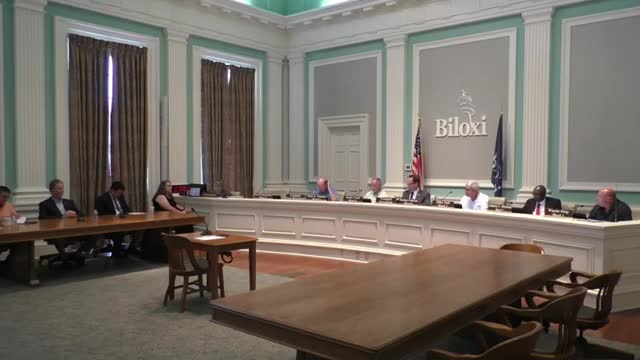
Summary
The Biloxi City Council failed to authorize the mayor to advertise a proposed three‑mill property tax increase intended to raise about $2 million to close a budget gap, after a 3‑3‑1 vote. Council members debated use of fund balance, capital projects and whether money should be set aside for economic development.
The Biloxi City Council failed to authorize the mayor to advertise a proposed three‑mill property tax increase intended to raise roughly $2 million to narrow a projected gap between revenues and expenses. The motion to publish notice of the potential increase, moved by Mr. Tisdale and seconded by Mr. Gray, ended in a 3‑3‑1 vote and did not pass.
The proposed increase would have raised the city’s millage from about 30.1 mills to roughly 33.1 mills, a change the mayor said would “generate about $2,000,000” in additional revenue. The mayor told council members the city typically plans to keep revenues and expenses close rather than draw down reserves.
The nut of the meeting was whether to ask voters, by advertising a proposed millage, to accept a short‑term revenue increase to cover operating expenses — mainly wages and benefits — or to rely on fund balance and deeper departmental cuts. Diana, the city finance official, told the council the projected ending general fund balance for FY2025 was about $12.1 million; the mayor and staff also discussed a broader, all‑funds unrestricted balance the audit firm ABL had earlier reported at about $26 million.
Council discussion ranged from using fund balance or bonds for capital needs to dedicating new revenue for economic development. Mr. Marshall and others pressed for a clearer plan to set aside money for economic development and to explain how any new revenue would be deployed; Mr. Marshall said, “Economic development will be the key to reducing the tax burden.” Mr. Shoemaker argued the council should continue searching for internal cuts: “I think we can find some other areas to cut,” he said.
Officials and council members raised several budget details during the discussion. The mayor and staff said one mill generates approximately $793,000 for the city, and staff estimated the cost to a homeowner would be about $10 per $100,000 of assessed value per year; staff later illustrated the arithmetic by noting that three mills on a $200,000 house (assessed at $20,000) would amount to about $60 a year.
Council members also discussed capital needs and bonding. Staff described a potential $10 million general obligation bond to spread capital costs for vehicles, roofs, generators and other multi‑year items; estimated interest and debt‑service impacts were discussed as part of the broader finance picture.
Two formal proposals were offered. Mr. Tisdale moved that the council authorize the mayor to advertise a proposed three‑mill increase (raising the millage to about 33.1 mills). Mr. Gray seconded the motion. Mr. Marshall later offered an amendment to advertise up to four mills; his amendment received no second and failed. The original motion to advertise three mills then failed on a 3‑3‑1 vote (three yes, three no, one abstention), so no advertisement will be published under that motion.
The council did not adopt a tax increase at the meeting. Mayor and staff noted that, if a proposal were properly advertised, the process would include a public hearing (staff referenced a September public hearing in the discussion) followed by a final adoption vote; even after an advertisement, the council could adopt any amount up to the advertised top end or decline to adopt an increase.
The meeting concluded with the council agreeing to continue departmental budget reviews. The mayor said he and the new CAO, Mr. Weaver, planned to meet with council members and department heads to seek further reductions in non‑departmental and other expenses and to return to the council with recommendations before any final action.
Council members, staff and the mayor emphasized that the advertising vote is procedural — it starts a statutory public notice and hearing process — and that any final millage change would come back to the council for adoption after public comment.