Get Full Government Meeting Transcripts, Videos, & Alerts Forever!
Get email alerts on the Public Transit topic
No spam. Unsubscribe anytime.
Coast Transit Authority seeks higher subsidy, warns fare increases reduce ridership; council asks for route study for East Biloxi
Summary
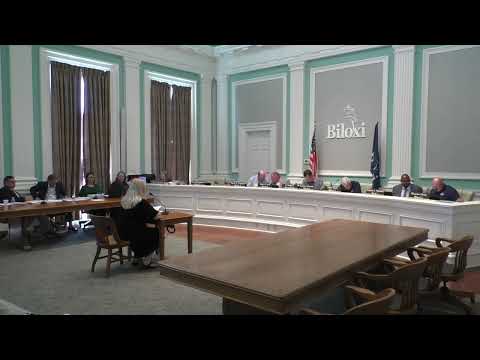
Coast Transit Authority presented a non-departmental budget increase and urged council to consider long-term support rather than fare hikes; council members asked CTA to study adding or rerouting service to Division Street in East Biloxi.
Coast Transit Authority (CTA) representatives told the Biloxi City Council the regional transit agency is operating under fiscal pressure and that fare increases can depress ridership, which in turn reduces federal formula grant funding that depends on passenger counts. Why it matters: CTA provides bus service and ADA curb-to-curb trips across the region; council members questioned how the authority can better serve low-income neighborhoods in East Biloxi while remaining financially sustainable. CTA leadership said operating a fixed-route bus costs about $82 per service revenue hour and that vehicle procurement is capital-intensive (new buses cost roughly $1.2 million each). The presenter explained that federal formula grants (FTA 5307) are allocated in part by ridership statistics: higher ridership can increase the agency nd local partners bility to access and match federal dollars. CTA officials noted an example from another system where eliminating fares raised ridership and federal revenue. Council members and the CTA discussed service patterns. East Biloxi councilmembers and residents urged the authority to restore or redirect routes that would serve Division Street and nearby neighborhoods north of the bridge, arguing that many residents in those wards lack private vehicles and need direct access to jobs and medical appointments. CTA said microtransit (first-mile/last-mile contracted services) and route adjustments are possible but require funding and operational changes; the authority s described at the meeting—ould trade service hours between corridors or propose targeted pilot routes if funding is identified. CTA staff said fare-box revenue fell as riders shifted to monthly passes after a recent fare change, and that some non-fare revenue such as advertising and lease income has declined as well. CTA proposed a roughly 4% increase in labor costs for the coming budget year and asked the council to consider a modest subsidy increase; the exact amount requested from Biloxi was discussed during the non-departmental review and will be included in the city—udget materials. Next steps: Council asked CTA to examine route adjustments and to return with specific cost estimates for a pilot on Division Street and for microtransit alternatives; CTA said it will provide ridership modeling, cost-per-service-hour estimates and potential funding scenarios to the city and the CTA board.