Officials warn state tax changes will shrink assessed value and strain district operations through 2031
September 09, 2025 | Greenfield-Central Com Schools, School Boards, Indiana
This article was created by AI summarizing key points discussed. AI makes mistakes, so for full details and context, please refer to the video of the full meeting. Please report any errors so we can fix them. Report an error »
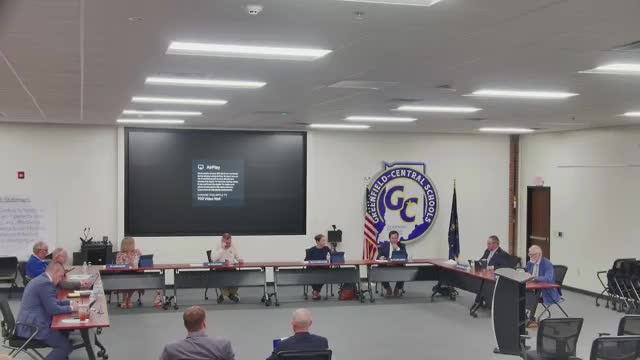
“Once we start applying that to the parcel level, this is what Policy Analytics predicts is going to happen to the the net assessed value of our school corporation,” the presenter said, summarizing a Policy Analytics review. The presentation showed the district’s gross assessed value growing while NAV falls as homeowner deductions and credits phase in through 2031.
Why it matters: staff told trustees the changes will lower the district’s property-taxable base, push some homeowners into greater circuit-breaker credits and reduce collectible levy revenue — particularly in the operations fund — making routine maintenance, HVAC, roofs and parking-lot projects harder to fund and raising the cost or complexity of borrowing.
Key figures presented (as stated at the meeting)
- The presenter said the district’s net assessed value projection was revised upward from $2,000,000,000 to $2,300,000,000 compared with the estimate discussed last month.
- The district’s total tax rate in 2025 was stated as $0.9308 (93¢). If the district holds levies constant and the NAV changes as projected, staff said the equivalent tax rate could rise to about $1.1713.
- Debt-service tax rate: currently about $0.60 per $100 of assessed value; projections show a peak around $0.69 and then a decline toward current levels by 2031 if levies remain unchanged.
- Operations fund: the presenter said the district’s maximum operations levy growth quotient is 4% and cited a projected operations levy ceiling of about $8,400,000 for next year (district would not collect the full amount after credits are applied).
- Circuit breaker and credits: staff projected circuit-breaker credits could increase to roughly $1,000,000 per year (the district’s historical circuit-breaker loss was under $200,000). The district’s median homestead AV was reported around $246,000–$247,000.
- Local income tax (LIT) elimination timing: staff said LIT is scheduled to be eliminated beginning in 2027–2028 under the law scenarios staff used; the property tax replacement credit (PTRC) is expected to be reduced or eliminated, which also affects tax bills.
Policy and process implications
Staff emphasized two borrowing-related thresholds in the state law discussed at the meeting: projects or a debt-service rate above 40¢ may be subject to petition/remonstrance procedures, and surpassing a 70¢ debt-service tax rate would require a referendum (the presenter said the statutory cap was changed from 80¢ to 70¢). Staff said maintaining current levies would likely keep the district under the 70¢ referendum trigger with the current projections, but that close monitoring will be required.
Public hearing and next steps
The board opened a public hearing for the 2026 budget and invited comment. No one registered to speak during the budget portion of the hearing, and the board closed the hearing without public comment. Staff said Policy Analytics will produce three additional studies as new assessed-value data and tax-collection figures become available (post-2026 NAV, post-2026 tax collections, and the 2027 AV), and the district will update projections accordingly.
Quotes from the meeting
“This is going to hurt us. This is gonna cause some problems in our revenue moving forward,” the presenter said. “We’re going to continue to do the things we’ve done. We’re going to continue to be as efficient as we can. But we do have some stuff coming out.”
Board reaction and implications
Trustees and staff discussed the implications for future capital work and maintenance priorities; presenters recommended keeping levies under the statutory thresholds where possible to avoid referendum requirements and noted the operations fund will be constrained as the law phases in. Staff also said it will be harder to borrow for projects that otherwise would be achieved through operations or debt service if NAV and credits evolve as modeled.
Ending: Staff asked the board to monitor AV releases and review follow-up studies from Policy Analytics; no levy changes or bond decisions were made at the meeting.
View the Full Meeting & All Its Details
This article offers just a summary. Unlock complete video, transcripts, and insights as a Founder Member.
30-day money-back guarantee
Sponsors
Proudly supported by sponsors who keep Indiana articles free in 2026

