Get email alerts on the Library Funding topic
No spam. Unsubscribe anytime.
Harrison County Library seeks 3% operating increase; asks Biloxi to consider millage support
Summary
Harrison County Library System director requested a 3% funding increase to raise employee wages and restore materials after years of flat funding; she also urged the city to consider placing library support on a millage basis.
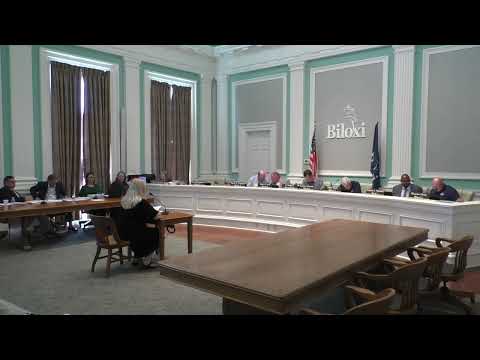
Sarah Chrisler Ruski, director of the Harrison County Library System, told the Biloxi City Council the system is seeking a 3% increase from municipal funders as part of the non-departmental budget review to address staff pay and depleted materials. Why it matters: The county library system provides public library services across Harrison County, including four branches in Biloxi. Library leaders said pay is low enough to hurt recruitment and retention for youth services and other front-line staff; they said materials budgets are well below historic levels. In testimony the director said the Biloxi portion of the system includes four branches and 25 Biloxi-based employees; she said 72% of those staff make $13 an hour or less and that no Biloxi library employee earns more than $19 an hour. The library asked for a 3% across-the-board increase to allow modest salary increases and to restore materials and technology. Ruski told council members that the library system is a political subdivision that lacks taxing authority and therefore asks local governments for operating support. Ruski also urged the council to consider a millage model for library funding under Mississippi law, which she said authorizes municipalities to levy up to 3 mills for libraries and counties up to 4 mills. She said a millage would create a more stable funding stream as city growth increases library demand. Council members asked follow-up questions about what the requested increase would cover (primarily staff raises), the library—ounty—ity funding split, and building ownership and maintenance responsibilities. Ruski said the county provides substantial funding (the library system had reported approximately $1.076 million in county support in the prior year), the state contributes roughly $200,000, and the city s the owner of the four Biloxi library buildings—overs building insurance and facilities maintenance; library budget requests cover operational costs and staff. Council members also pressed for details about repair appropriations: library leadership said a small non-departmental allocation (listed in the city budget as $25,000) covers minor building repairs but that capital work such as roofing and HVAC has required larger one-time transfers in prior years. On collection and usage, Ruski said the county system had more than a quarter-million visitors across nine branches in the prior year, checked out over 440,000 items, ran about 2,000 programs with some 42,000 attendees, and handled more than 92,000 computer sessions. She said the library seeks modest raises to retain youth services staff and improve materials that are 46% below 2005 levels. Council members asked about displays and materials policies after prior controversy; Ruski described a committee review process and said controversial displays require staff review and, if appropriate, can be escalated to library leadership for reconsideration. Next steps: The council and administration discussed moving a small building-repair allocation from non-departmental to public works and asked library leadership to provide a precise list of uses for the requested increase. City and county funding decisions will be finalized as part of the municipal budget process.
AI generated
The text on this page is AI generated. Summaries, highlights, analysis, and video transcripts are all produced from the original source material.
AI can make mistakes, so if you spot one, and we will fix it for everyone.
Note: the source content is unaltered by us. Any content source we link to, be it a video, an audio recording, or a document, is presented exactly as its publisher released it. That publisher is usually a government body, sometimes an individual official or another organisation.