
South Madison trustees review budget outlook as state funding and insurance costs rise
Get AI-powered insights, summaries, and transcripts
Subscribe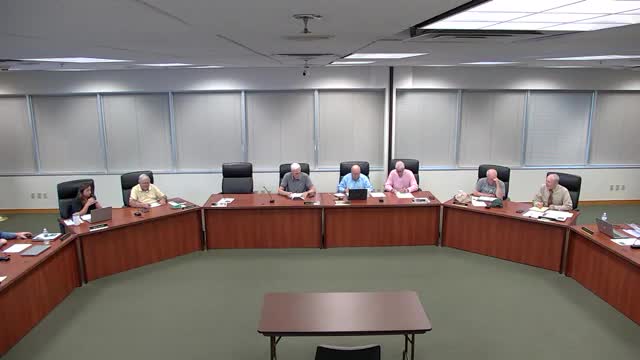
Summary
At an Aug. 21 work session the South Madison board reviewed a preliminary budget showing state aid as the district's largest revenue source, an advertised property-tax levy target, changes to a state textbook reimbursement line item and mounting self‑insurance claims that could pressure future budgets.
At a budget work session Aug. 21, the South Madison Community Board of School Trustees heard a detailed overview of the district’s revenue outlook, including state funding totals, a proposed property‑tax levy to advertise and mounting health‑insurance claims that district staff said will affect future budgets. Mr. McCarty, a district staff member who presented the financial overview, said state average‑daily‑membership funding continues to be “by far and away the biggest revenue source” for the district.
The presentation matters because those revenue projections set the upper bound for what the district can lawfully advertise and seek to collect in property taxes and drive planning for salaries, transportation and capital work. Mr. McCarty told trustees the district received $31,391,000 in state support based on a count of 4,528 students; he said staff will advertise a property‑tax levy of $5,971,000 as part of the budget process.
Board members and staff discussed how last year’s separate state line item for textbook reimbursement — “about $716,000,” as cited by Mr. McCarty — has been folded into general state support. McCarty warned that when that line item is removed from a distinct category and included in a larger total, the apparent year‑to‑year increase in the state amount is smaller once the textbook dollars are excluded.
Staff described the district’s operating structure: an education fund that pays classroom personnel and student services, and an operations (property‑tax) fund that covers administrative offices, maintenance, custodial staffing and transportation. McCarty said the district will continue the practice of advertising a slightly higher budget and levy than it expects to realize — a standard safeguard because the Department of Local Government Finance (DLGF) can only approve a budget no higher than the advertised amount.
Trustees also heard about capital planning and a required bus replacement plan. Mr. McCarty noted that bus replacement and capital‑projects plans are posted on the DLGF website and district website and that state rules require public posting and a public hearing before final approval.
A significant portion of the discussion addressed rising health‑insurance claims in the district’s self‑insurance plan. McCarty said the district has seen a sharp increase in funding‑claims requests: “in that 8‑week time frame relative to last year, our funding request were up $844,000,” and in the subsequent 8 weeks another “$780,000,” producing a large year‑to‑date increase. He said the district had been increasing employee premium contributions in prior contract changes but that the claims trajectory remains a concern for the insurance fund balance.
On timing and next steps, McCarty said staff will ask the board in two weeks for permission to post the proposed budget and required plans, with the public hearing to be held Sept. 18 and a request for board approval scheduled for Oct. 2. He reiterated that the official student count date for state funding is Oct. 1 and that enrollment and assessed‑value changes could require adjustments before final adoption.
Discussion — not formal action — dominated the session. Board members asked clarifying questions about the state formulas, circuit‑breaker (property tax cap) losses, and whether cash balances are sufficient to absorb short‑term shocks. McCarty said the district planned to include a transfer from the education fund to the operations fund, as it has in prior years, to cover operations expenses affected by circuit‑breaker losses; he characterized that transfer as a normal part of budgeting rather than a new policy change.
The board did not take a final vote on the budget at the Aug. 21 work session; McCarty presented figures and timelines and said staff will ask for formal permission to post the proposed budget at the board’s next regular meeting.