Directors defend assessment suite; board members express concern about testing quantity
August 25, 2025 | Warren County, School Districts, Tennessee
This article was created by AI summarizing key points discussed. AI makes mistakes, so for full details and context, please refer to the video of the full meeting. Please report any errors so we can fix them. Report an error »
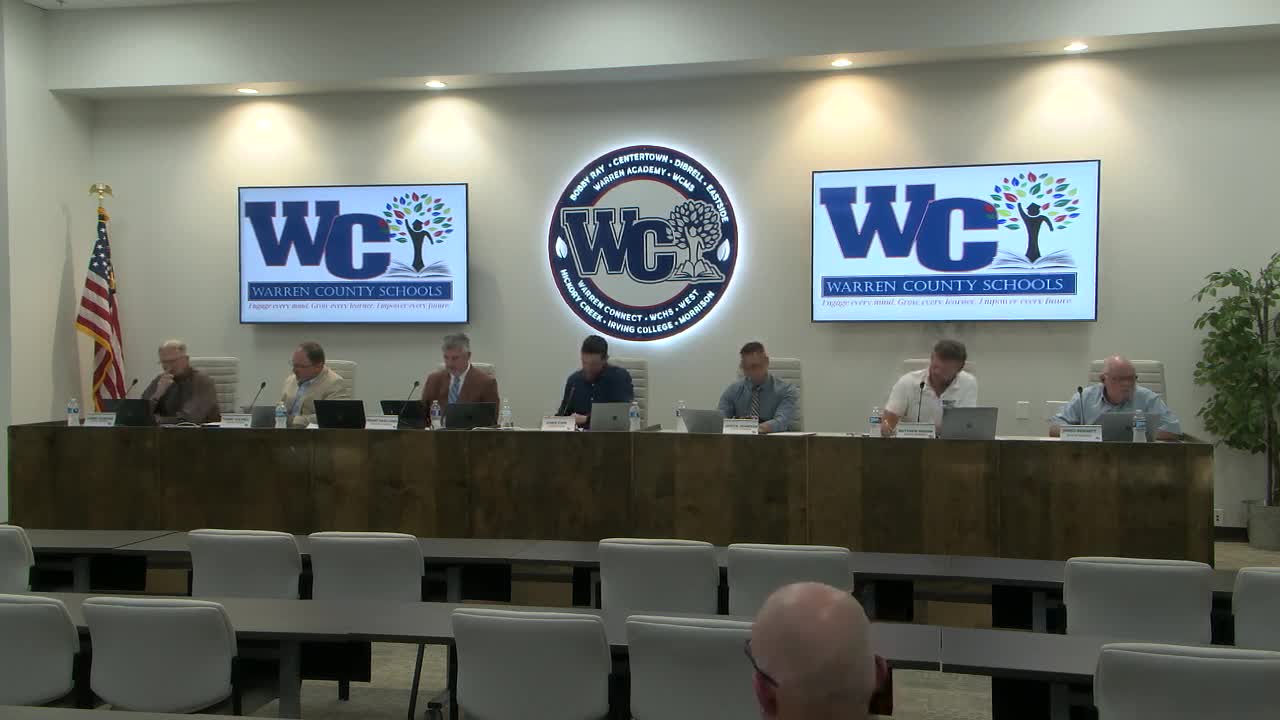
“We’ve tried to streamline the number of assessments that we had last year, moving forward into this year, but we’ve been careful to maintain the types of assessments that are needed to support student learning,” Dr. Kathy Bryant said, explaining that state-required assessments are marked with an asterisk on presentation slides.
Dr. Nicole Crouch described the role of predictive assessments: “They're like practice games before the championship. And we want to practice like we play,” she said, referring to tools such as I-Ready, AIMSweb Plus (state screener), Mastery Connect (district choice), preACT, and end-of-course assessments and TCAPs.
Board members acknowledged the instructional value of assessment data but several expressed concern about quantity and classroom impact. One board member said, “it's just kinda overwhelming when you hear, second or third graders doing 11 or 12 assessments in a year's time,” and another said the volume risks teaching students “how to master a test and not how to learn.”
The directors said some assessments—AIMSweb Plus and the state EOCs—are mandatory, while others such as Mastery Connect and the preACT are local choices used to inform instruction and preparation for state testing. Staff emphasized that the current suite is more streamlined than previous years and that predictive assessments are used to identify gaps and plan supports at student, class, grade and school levels.
The discussion included grade-band examples showing which assessments K–2, 3, 4–5, middle, and high school students take and clarifications about appeals processes tied to specific screeners (for example, that AIMSweb reading scores are necessary for certain appeal eligibility). Board members asked about reliability and comparability between Mastery Connect and state scores; staff said Mastery Connect provides local diagnostic information but is not a state-mandated instrument.
Directors said the district will continue to weigh assessment benefits against classroom time and testing fatigue and will report back to the board on any changes to the assessment plan.
View the Full Meeting & All Its Details
This article offers just a summary. Unlock complete video, transcripts, and insights as a Founder Member.
30-day money-back guarantee
Sponsors
Proudly supported by sponsors who keep Tennessee articles free in 2026

