
Trustees raise questions about Census estimates, plan outreach to municipal groups
Get AI-powered insights, summaries, and transcripts
Subscribe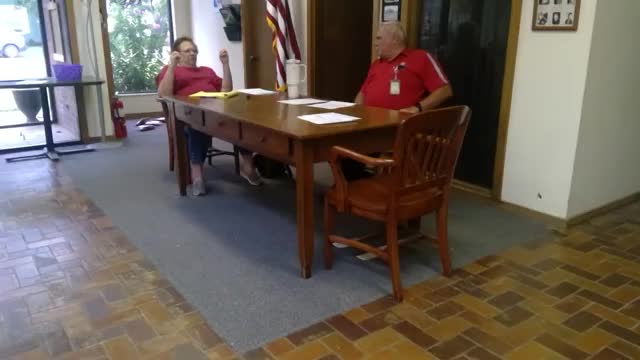
Summary
Before the Board of Trustees called its Aug. 28 special session to order, participants said U.S. Census Bureau population estimates for their town appear inconsistent with local knowledge and discussed contacting the Oklahoma Municipal League and the Oklahoma Municipal Assurance Group to verify data and compare with similar towns.
Before the Board of Trustees called a special session to order at 7:01 p.m. on Aug. 28, meeting participants discussed apparent discrepancies in U.S. Census Bureau population data for their town and steps to verify the numbers. They said they would reach out to the Oklahoma Municipal League (OML) and the Oklahoma Municipal Assurance Group (OMAG) for data and peer comparisons.
The discussion centered on two types of Census data, the decennial census and annual survey estimates. One participant explained that the decennial census is conducted every 10 years and that survey-based estimates — commonly produced from the American Community Survey — sample only a small share of the population. The participant said the town’s more recent estimates differed sharply from prior counts and local expectations.
“We have more people 65 making 75 to a 100,000 in this town,” the participant said, describing how some age and income estimates did not match local records. The speaker later summarized the broader concern: “It’s gone wacko since they started using this survey data.” (Speaker 2)
Speakers discussed specific local numbers. One participant said a local head count they compiled came to about 334 residents, compared with a 2010 figure the group recalled as roughly 350. Speaker 2 said they were trying to reconcile those figures and that similar discrepancies had been reported in other nearby towns; the speaker said a colleague, Bryce, had found a comparable problem in Cherokee.
Participants talked through possible next steps. One said they planned to contact OML to identify member towns of similar size and to ask whether those towns saw similar shifts in Census-derived numbers. They also mentioned contacting OMAG because that organization handles insurance programs for many small municipalities and “does our size” and thus may hold comparative data.
“There’s probably a bunch more just like it,” one participant said when considering whether other small Oklahoma towns might have similar estimation issues. Another participant suggested generating broader attention — including media outreach — to prompt review of other towns’ numbers.
No formal motion or vote was recorded during the discussion. After agreeing to continue work on the discrepancy, the group moved to convene the Board of Trustees special session; the session was called to order at 7:01 p.m.
Why this matters: Local population counts derived from the U.S. Census Bureau affect municipal planning, grant eligibility, and insurance-risk assessments. The speakers described their concern as a practical problem for budgeting and comparing the town with peer communities, and they discussed verification steps rather than taking an immediate formal action.