TSU trustees approve grouped academic program modifications; provost says proposals came through faculty channels
August 05, 2025 | Tennessee State University, Public Universities, School Districts, Tennessee
This article was created by AI summarizing key points discussed. AI makes mistakes, so for full details and context, please refer to the video of the full meeting. Please report any errors so we can fix them. Report an error »
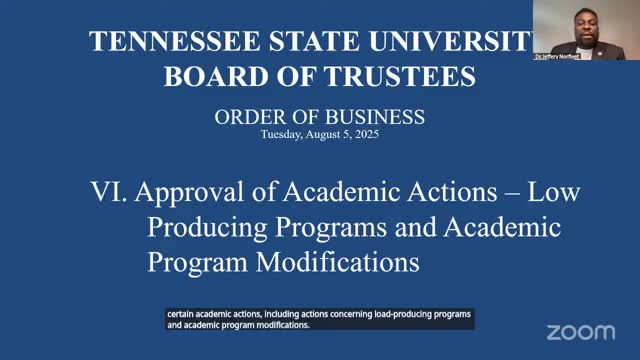
Why it matters: the approved academic modifications affect curricula and organizational structure across academic units. Trustees noted the changes reached the board after faculty and departmental processes; some trustees asked for caution when adopting bundled items during an ongoing dean search.
Trustee Norfleet, chair of the Student and Academic Affairs Committee, summarized that the committee considered low‑producing programs and program modifications at its July 1 meeting and recommended the actions to the full board. “I move for the full board to approve the academic actions for academic programs and academic units as outlined in table 1 in today’s board materials,” Trustee Norfleet said.
Provost Robbie Melton told the board the recommendations came from faculty through departmental and college committees and that the university follows SACSCOC procedures on curriculum changes. “Please know that according to SACSCOC … all curriculum items are with the faculty,” Melton said, adding that not every faculty member will agree with every change but that the items had documentation from faculty governance bodies.
A handful of trustees raised process questions. One trustee asked whether approving the package required the entire board to accept every listed change (for example, consolidation of departments in the College of Business) or whether trustees who objected to a single item should vote no. Chair Norfleet replied that the committee recommended the package as a whole and that the board could vote collectively or withhold approval. Trustees emphasized that a new dean, once hired, may wish to review certain structural changes, and some suggested caution about making permanent changes during an active dean search.
After discussion, the board approved the motion and authorized the university’s proper officers to take necessary steps to implement the approved academic actions with THEC and SACSCOC.
What happens next: University officers will proceed with the administrative steps needed to implement the approved program modifications and will coordinate required notifications and approvals with THEC and SACSCOC. Trustees asked that future, potentially sensitive items be presented with clear documentation of faculty input and, when relevant, consideration of ongoing dean searches.
Don't Miss a Word: See the Full Meeting!
Go beyond summaries. Unlock every video, transcript, and key insight with a Founder Membership.
30-day money-back guarantee
Sponsors
Proudly supported by sponsors who keep Tennessee articles free in 2025

