Get Full Government Meeting Transcripts, Videos, & Alerts Forever!
Get email alerts on the Substitute Staffing Partnership topic
No spam. Unsubscribe anytime.
Human-resources staff present ESS proposal to address substitute and paraprofessional shortages
Summary
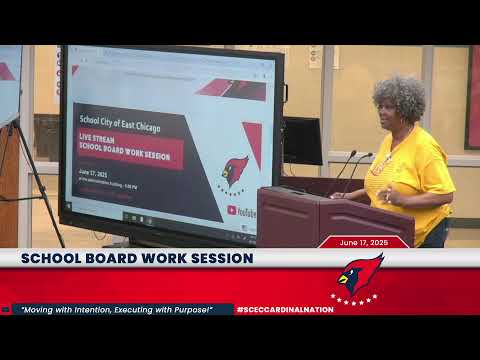
The district’s HR department invited ESS to present a full‑service substitute-staffing proposal at the June 17 work session. ESS outlined recruiting incentives, training, reporting tools and a no-subscription cost model; HR said ESS would take over absence management if approved and that implementation typically takes 4–6 weeks.
School City of East Chicago human-resources staff on June 17 presented a staffing‑services proposal from ESS (Educational Staffing Services) aimed at addressing shortages of substitute teachers, paraprofessionals and related staff.
Doctor D. McJunkins, director of HR, said the department vetted proposals from multiple vendors and invited ESS to present. ESS executives described a full‑service model that emphasizes local recruiting, building‑level area managers, professional development for substitutes, a "refer a friend" bonus, partial credentialing reimbursement, and reporting dashboards that provide fill rates, hires and weekly status updates.
Bernie Peltz, ESS Midwest executive vice president, said ESS currently serves 32 Indiana school corporations and emphasized a principal‑centric model that assigns area managers to work directly with building administrators. Jessica Johnson (recruiting) described community outreach, college recruiting and local event attendance to build a pool of substitutes. ESS said it offers benefits and optional 401(k) access for employees and that the vendor would handle required background checks, credentialing and HR compliance. ESS representatives said the district would pay only for positions ESS fills; there are no recurring subscription fees.
Trustees asked about timeline and scope. ESS said implementation typically takes four to six weeks and that the vendor can configure the district’s existing absence‑management system (Frontline) for improved analytics and fill rates. ESS noted it can recruit bilingual substitutes but did not claim an immediate bilingual‑staffing guarantee. District HR asked whether ESS could be a source of longer‑term hires; ESS said the vendor frequently converts substitutes into district hires and will coordinate with HR on any such transitions. A district staff member noted ESS would not be usable for certain special‑education care placements in this context.
Ending: HR recommended ESS for a district partner to address shortages and asked the board to consider the proposal at upcoming regular meetings. ESS provided references and offered to submit a formal implementation timeline for board review.