
Council reopens discussion on Planned Development rules, asks staff to compare other cities
Get AI-powered insights, summaries, and transcripts
Subscribe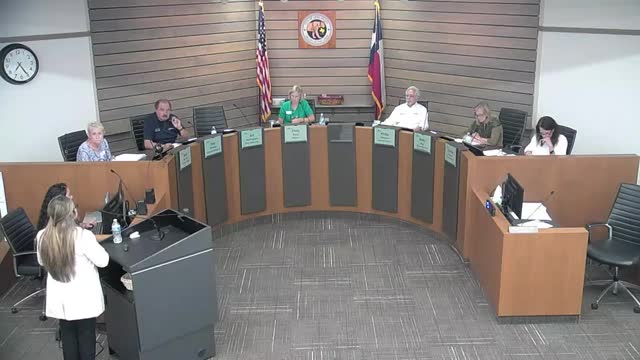
Summary
Councilors debated whether to keep, revise or eliminate the city’s Planned Development (PD) zoning option. Many members said the PD language is subjective and needs clearer, enforceable criteria; staff was asked to gather PD language from comparable cities and return with recommendations.
The City Council discussed proposed changes to the Planned Development (PD) provisions in Chapter 15 of the zoning code and asked staff to research how other cities structure PD districts. The council did not adopt an ordinance; instead the council directed staff to return with comparative language and proposed revisions.
Why it matters: councilors said the PD process has been used in recent large projects and that the existing PD language contains subjective terms such as “unique” and “superior” that make it difficult to defend denials or to ensure consistent outcomes. Several members said PDs can be useful for genuinely mixed‑use, project‑driven developments — but only if the rules are precise and require developers to demonstrate objective benefits over standard zoning.
Key details: City Manager Dr. Caldera explained PDs are intended for project‑level flexibility when a development does not neatly fit a single zoning district. Councilors who had worked on previous PD cases (including Seneca West and Trilogy) described differing neighborhood experiences of notice and the timing of public input. Councilor Marsh summarized a common concern: PDs use words that are “fluffy” and lack measurable thresholds, which weakens the city’s ability to evaluate proposals consistently.
Direction to staff: the council asked staff to compile PD language and examples from comparable municipalities, and to identify objective criteria that would require developers to prove a PD is necessary (for example showing standard zoning cannot achieve the proposed outcome or demonstrating measurable public benefits such as increased tax yield by a specific percent). The city manager said staff will return with examples and a draft revision for further council discussion.
Ending: staff will return with drafted language and comparative PD provisions from other cities; councilors signaled willingness to retool PD rules rather than eliminate the tool outright if the code is made specific and defensible.