
Speakers urge Bergen County to adopt safety-first road designs and Target Zero goals
Get AI-powered insights, summaries, and transcripts
Subscribe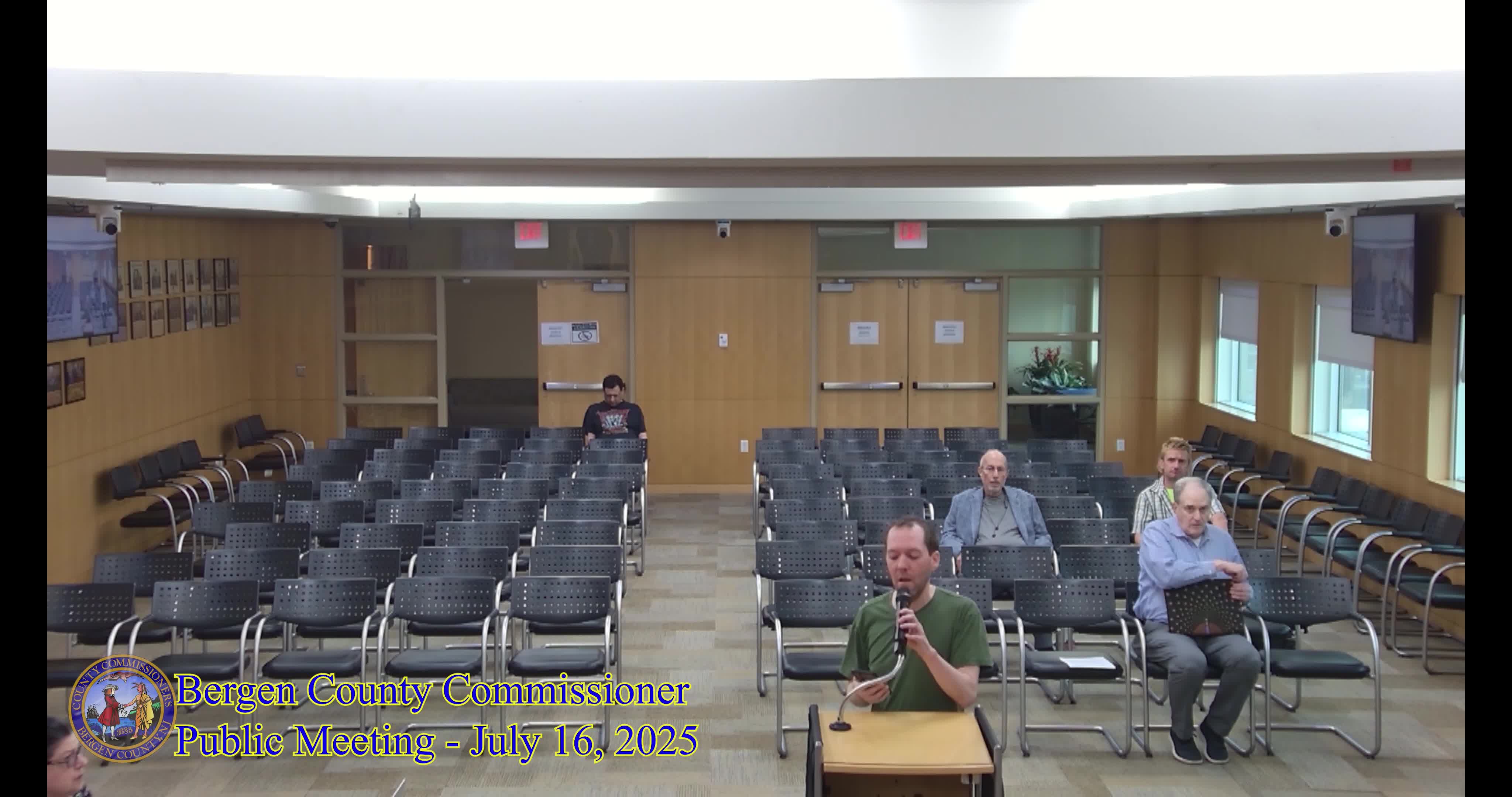
Summary
During public comment, residents urged commissioners to adopt the county Local Safety Action Plan goals, prioritize non-motorized users and commit to a target of zero traffic deaths and serious injuries.
Two public commentators urged the Bergen County Board of Commissioners to adopt a safety-first approach to county transportation planning and to support the county’s Local Safety Action Plan.
Pat Deroma framed the issue in terms of climate and infrastructure, arguing that impermeable surfaces and car-centered design increase flooding and urban heat and that county infrastructure must adapt. “Our infrastructure needs to adapt,” Deroma said, urging commissioners to consider active-transportation and decarbonization strategies.
Chris Noel told the commissioners the Local Safety Action Plan sets a goal of zero traffic deaths and serious injuries and that New Jersey’s Target Zero law sets a statewide similar goal for 2040. “If we really want to achieve zero fatalities and serious injuries, we need to meet people where they are,” Noel said. He said road design choices — lane widths, mid-block crossings and street geometry — influence behavior and that engineering standards are guidelines to be used in service of policy goals.
No formal action was taken at the meeting. Commenters asked elected officials to make value-based policy decisions about road design and to use engineering judgment to implement safety and equity goals. Speakers cited a county finding that pedestrians and cyclists are “25 times more likely” than drivers to be killed or seriously injured on county and municipal roads; they urged the county to treat non-drivers’ needs as a policy priority.
The comments were part of the general public comment period; commissioners did not vote on transportation policy at the meeting.