Get Full Government Meeting Transcripts, Videos, & Alerts Forever!
Get email alerts on the Rails To Trails Remediation topic
No spam. Unsubscribe anytime.
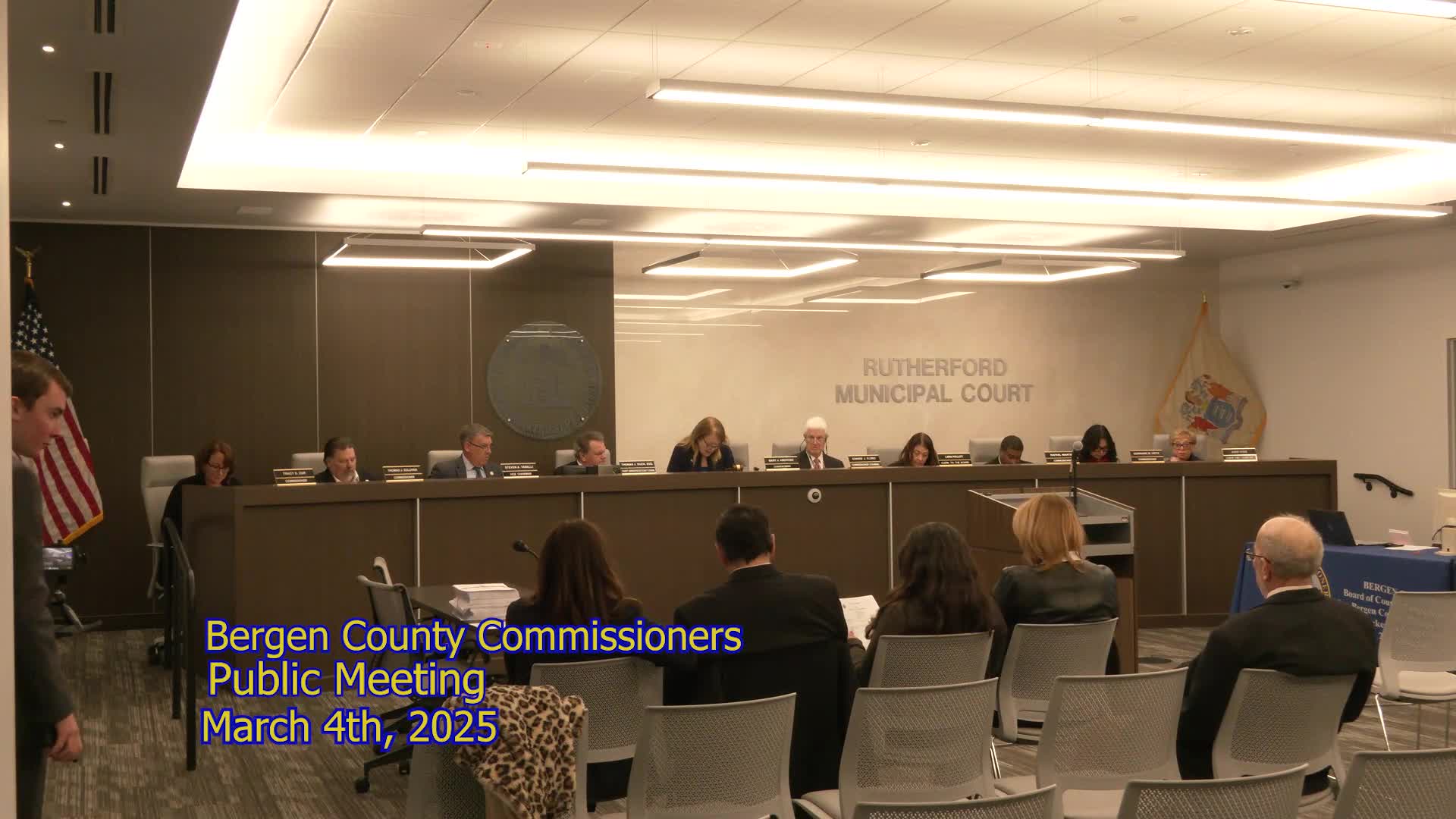
Bergen County accepts $2.69 million remediation grant for Cotton Hill rails‑to‑trails project
Summary
The Bergen County Board of Commissioners presented a $2,690,000 open‑space remediation grant for the Cotton Hill Veil Trails, a rails‑to‑trails conversion of an abandoned Norfolk Southern corridor; county officials say design work is under way and estimate a roughly three‑year process but warned cleanup could delay construction.
Bergen County commissioners on Wednesday presented a $2,690,000 grant to support remediation and redevelopment of the abandoned Norfolk Southern rail corridor that county leaders plan to convert into the Cotton Hill Veil Trails, a multiuse greenway connecting the Passaic River to nearby downtowns.
The grant, county officials said, comes from hazardous‑discharge remediation sources administered through state open‑space programs and will support cleanup before trail construction begins. "This project is a testament to our commitment to expanding parkland, enhancing outdoor recreation, and ensuring environmental sustainability for Bergen County communities," Vice Chair Tonelli said during remarks introducing the award presentation.
The funding addresses contamination that is commonly found in former rail beds, officials said. An acting parks director who spoke about schedule estimates the project will take about three years to move from the current design phase to construction, but cautioned that on‑site hazardous materials — notably railroad ties treated with creosote or related compounds — could require additional remediation and slow progress. "If there's anything else that has spilled, that could delay it," the acting parks director said.
The county previously approved a request for proposals for the design phase at an earlier meeting, and county officials said representatives from both Rutherford and East Rutherford will be part of the design process. Council President Stephanie McGowan of Rutherford thanked the board for choosing the borough as a host for the meeting and said residents are eager for the trail to be completed.
The county described itself as the fee owner of the property and said it will oversee remediation and conversion to a recreational and conservation walkway. County leaders declined to set a firm completion date; the estimated three‑year timetable is the working projection given current approvals and the need to remediate hazardous materials.
Background and timeline details discussed at the meeting: the design phase has gone out for RFP; participating municipalities are expected to have representatives on the design team; remediation funds originate from state hazardous‑discharge remediation/open‑space programs that require site investigation and cleanup before construction can proceed. Julia Siegel, chair of Rutherford’s Green Team, said soil testing at the borough community garden showed no concerning findings, but county speakers said the rail corridor itself must be assessed for rail‑related contaminants.
Looking ahead, county officials said they expect public engagement during the design process and said grant funding will be used specifically for remediation and redevelopment activities. The timeline and eventual construction schedule remain contingent on remediation results and procurement for the construction contract.