
Board of Zoning Appeals approves 8-foot rear-setback variance for Chatham Hills lot
Get AI-powered insights, summaries, and transcripts
Subscribe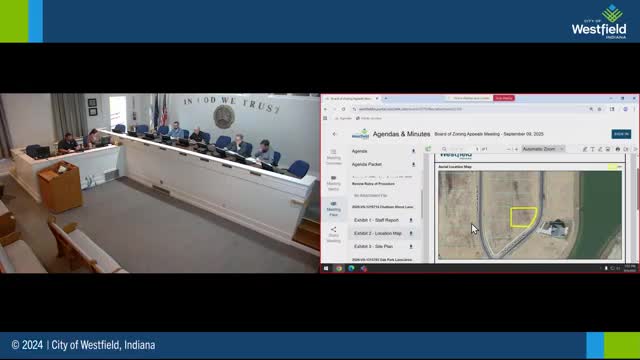
Summary
The Westfield Board of Zoning Appeals voted to grant an 8-foot variance to the 30-foot minimum rear-yard setback for a 0.26-acre lot in the Chatham Hills Planned Unit Development so a production home plan can be built without a future variance if a patio is enclosed.
The Board of Zoning Appeals voted to approve a variance allowing a home to encroach 8 feet into the 30-foot minimum rear-yard setback for a 0.26-acre lot in the Chatham Hills planned unit development. The motion carried on a roll call vote with four affirmative votes and no dissent.
The variance was requested so a not-yet-built single-family detached home from a production builder can be sited on a lot that narrows at its midpoint along Chatham Shore Lane, and to avoid a future separate variance if a homeowner later encloses an open-air patio. Dane Crabtree of the Community Development Department told the board the home “still encroaches approximately 4 feet into the rear yard setback” and that the petitioner requested an additional 4 feet for a cumulative 8-foot encroachment so an enclosed patio could be added in the future without another variance.
The case matters because it asks the board to weigh whether irregular lot geometry creates a “practical difficulty” under the three statutory criteria the board uses to review variances: harm to public health/safety/morals/general welfare; substantial adverse effect on adjacent property value or use; and whether strict application of the zoning ordinance will result in practical difficulty using the property. Crabtree summarized those criteria to the board, noting the third criterion — practical difficulty — is central in this petition.
During discussion, one board member asked the petitioner why a home plan that does not fit the lot was proposed. A representative for the homebuilder said the builder purchases finished lots and uses plans from its standard portfolio; the lot shape and a prior developer’s platting left the current plan as the closest fit. The builder’s representative said the builder is “not a custom builder” and that the lots had been purchased from another firm after platting by the original developer.
Board members debated precedent and neighborhood appearance. One member said the board does not set precedent automatically and must evaluate each lot on its own facts. Another member said the primary concern was aesthetic compatibility with the surrounding homes rather than strictly who created the condition.
The board approved the variance and then approved findings of fact for petition 2509-V-12. The order as presented requires recording any conditions noted in the staff report before permits may be issued.
No public commenters or emailed comments were recorded in the staff summary for this petition, and the department reported no public comments had been received prior to the hearing. The petitioner’s representative (listed in staff materials as a David Weekley Homes representative) was present but made no separate public presentation beyond answering board questions.
The board’s action allows the applicant to obtain a building permit consistent with the approved variance, subject to the conditions and recording requirements stated in the staff recommendation.