
Somerset County Officials Praise First Responders After Two Summer Storms
Get AI-powered insights, summaries, and transcripts
Subscribe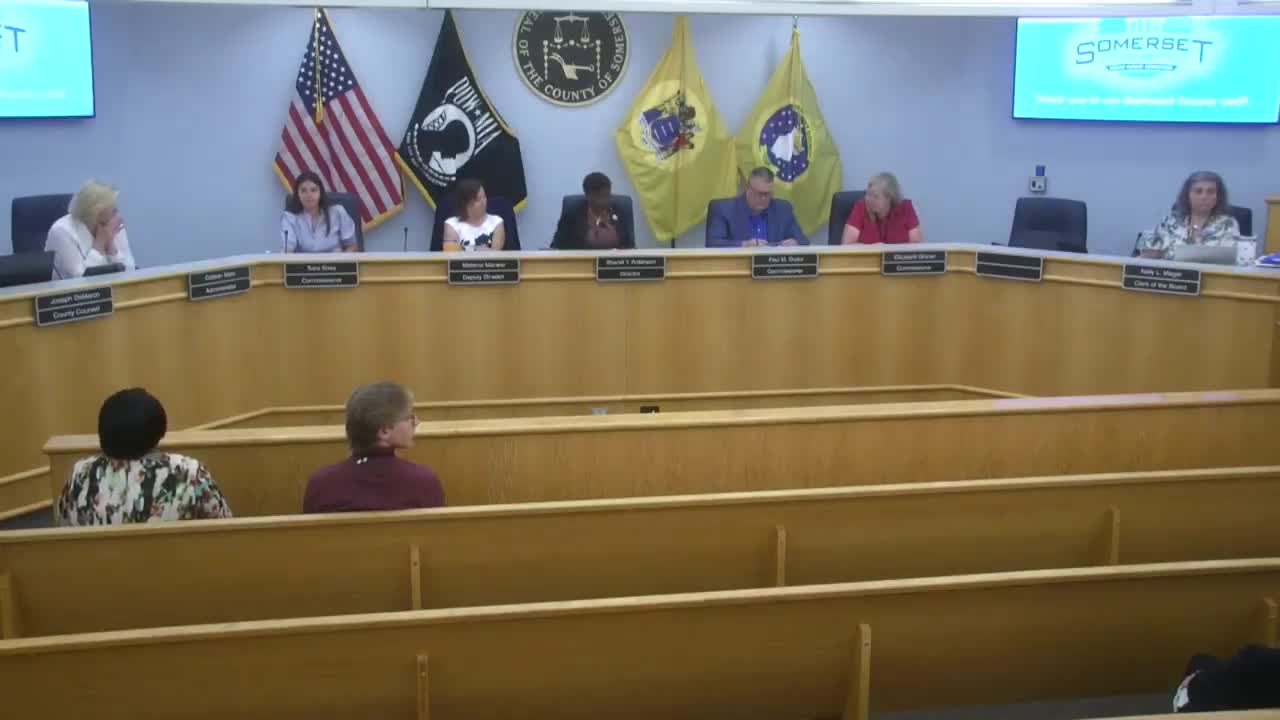
Summary
County leaders thanked emergency management, public works and communications staff for response to July storms, citing hundreds of 9-1-1 calls and roughly 2,000 total calls handled during peak periods; no new formal actions were taken at the work session.
Somerset County leaders on July 22 publicly thanked emergency responders, public works crews and communications staff for their response to two severe summer storms that produced widespread flooding and property damage in parts of the county.
The recognition came during the county Board of Commissioners' July 22 work session, where Director Robinson and other officials described a multiagency response that included swift‑water teams, dive‑team support and extended staffing at the 9‑1‑1 communications center.
Director Robinson said the county declared a state of emergency and activated its Office of Emergency Management after flooding tied to storms on July 3 and July 14 (described in meeting remarks). “We are so proud of the work that our staff are doing,” Robinson said, thanking responders for keeping residents safe. A communications staff member reported the center handled roughly 2,000 calls during one storm period, including “700 plus 9‑1‑1 calls.” A separate county official said the 9‑1‑1 center received what was described as about 700 emergency calls during the event; county staff characterized the response as involving dozens of personnel and mutual‑aid partners.
Why it matters: County officials said the storms produced concentrated damage in North Plainfield, Watchung and the Route 22 corridor, requiring rapid coordination across county agencies and neighboring jurisdictions. Commissioners said the investments in equipment and training—cited examples included a recently purchased high‑water rescue vehicle—were decisive in enabling rescues and limiting loss of life within the county during the second storm.
Most important facts first: a county representative said the communications center took around 2,000 calls during the storm period, including more than 700 emergency calls; emergency management formed swift‑water teams that supported overloaded fire and rescue units; sheriff’s dive team members and a high‑water rescue vehicle were deployed to assist rescues and rescues in progress.
Supporting details: Chief (public safety) and Sergeant Coasey of the Sheriff’s Office described field operations and mutual‑aid coordination with surrounding towns. Trevor Oldenburg, identified in the meeting as commander of the county dive team, told commissioners the high‑water rescue vehicle obtained after Hurricane Ida was “instrumental” in reaching some locations and deploying boats. Public works representatives described clearing debris and reopening roads; those staff said they worked extended shifts to restore travel lanes and clear fallen trees. Officials also noted the mental‑health impacts of severe weather and directed residents seeking assistance to the county’s Richard Hall Health and Wellness Center, which county staff said will prioritize callers identifying flood impacts.
Limits and next steps: County speakers emphasized that much of the recovery and infrastructure work remains ongoing. No new policy or spending was approved at the meeting on storm response; commissioners said many storm‑related cleanup and repair projects will be handled through existing emergency contracts and future appropriation items. Commissioners praised mutual‑aid partners and thanked state and federal officials who provided resources and advice during the incidents.
Ending: Commissioners said the county will continue after‑action reviews to refine emergency procedures and urged residents affected by flooding to contact county services for recovery resources and mental‑health support.