Get Full Government Meeting Transcripts, Videos, & Alerts Forever!
Get email alerts on the Student Technology Policy topic
No spam. Unsubscribe anytime.
Santa Fe Public Schools weighs district-level cell-phone restrictions as state bills move
Summary
Public commenters urged an immediate district ban on student cell phones; Superintendent Chavez said the district is piloting blocking devices at six schools and will report back this summer while state legislation remains pending.
Public commenters and school leaders pressed Santa Fe Public Schools to act on student cell-phone use while state legislation advances.
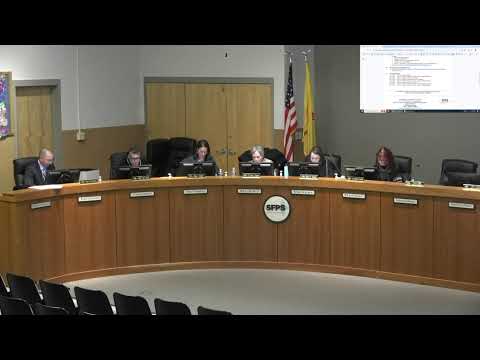
At the Jan. 30 Board of Education meeting, community member Garren Spray urged immediate district action rather than waiting for the Legislature. "We do not have time to wait for the state legislature," Spray said. "We need to stop the bleeding now. There's no reason why SFPS can't enact some type of cell phone ban in August at the beginning of the next school year." Spray asked the district not to place the burden of enforcing a ban on classroom teachers.
Teacher Eric Bridal described classroom impacts he said he sees daily: students "addicted to sports gambling," trading cryptocurrencies and playing online games that interfere with learning. Bridal said these behaviors make classrooms less socially engaging and hamper students' attention.
Superintendent Chavez said the district has begun small-scale pilots and will return findings to the board. "We are piloting a couple of initiatives at 6 of our schools. Devices, cell phone blocking devices. We're gonna be able to gather some of this information, and bring it back to you this summer," Chavez said. Chavez also noted the district will monitor competing bills at the Legislature.
Board discussion connected the cell-phone debate to broader concerns about student behavioral health. Board member Doctor Gonzales said, "There's several bills that deal with behavioral health. That's kind of a focus for this year's legislature and the governor is very much behind it." Separately, a board member referenced House Bill 58, a proposal to expand funding for school mental-health rooms; the bill was discussed as context for behavioral-health needs but does not itself address phones.
What happened: the board did not take formal action on a district-wide phone ban at the meeting. Instead, the superintendent announced the pilot and said staff will compile results for a summer report to the board.
Why it matters: supporters say an immediate district policy could affect classroom learning, safety and student mental health; opponents and some staff have warned about shifting enforcement duties to teachers. The board must weigh pilot results, legal/regulatory limits, parental outreach needs and potential state funding or mandates before adopting districtwide rules.
Next steps: Superintendent Chavez will report back this summer with pilot findings; state legislation remains pending and could affect district options and funding.