
Iowa City commission weighs public EV charging, equity and private deployment
Get AI-powered insights, summaries, and transcripts
Subscribe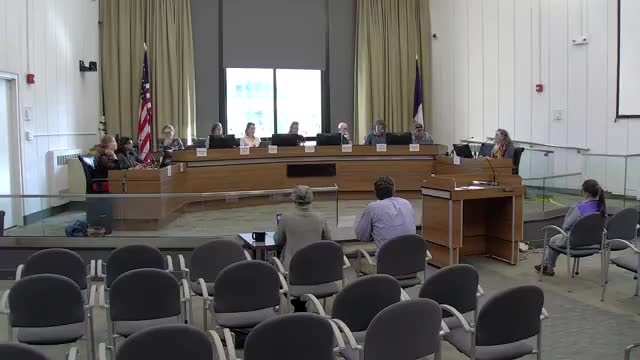
Summary
Commission members debated whether electric-vehicle (EV) charging should be treated as a neighborhood amenity, weighing data collection, equity, private market roles and the city’s role in placing chargers where people linger.
Iowa City’s Climate Action Commission discussed on Sept. 17 whether public electric-vehicle charging should be treated as a neighborhood amenity and where the city should place chargers to advance equity and climate goals. Temporary chair Angie Smith and city staff, including Sarah Gardner and Daniel Bissell, led the conversation; commissioners raised concerns about private versus public deployment, charger types and usage patterns.
The discussion focused on three practical questions: what data the city can collect from publicly owned chargers, whether the city should rely on private companies to build out infrastructure, and whether chargers belong in parks or at locations with longer “dwell time” such as workplaces and recreation centers. Sarah Gardner, a city staff member, told the commission the city’s public charging network provides the only comprehensive usage data available to the municipality: "Based on the number of EVs registered, we're at about 5% of our total EV registration," she said, and added that public stations show that "more than half of the charging that's happening at our parking garages or parking ramps right now is from people who do not live in Iowa City."
Daniel Bissell, who monitors charging infrastructure for the city, confirmed that city-owned chargers are level 2 units and that the municipality currently operates 16 charging ports downtown. He said publicly owned level 2 chargers are intended primarily to serve residents and to provide the city with usage data; privately owned DC fast chargers and Tesla superchargers are commercially operated and more often serve travelers. Bissell offered to provide detailed usage numbers after the meeting.
Commission members raised equity and technical concerns. Commissioner Nadia urged the group to avoid competing with local businesses and to consider inviting private charging companies to perform market research before the city expands its network. Another commissioner noted that Tesla’s proprietary connectors and the uneven availability of adapters can create access issues for drivers of non‑Tesla vehicles. Commissioners also pointed out seasonal variation in charger use and asked staff whether monthly and seasonal breakdowns of charging sessions are available.
From staff data cited during the meeting, the city’s public ports see roughly 400 charging sessions per month and most publicly owned chargers are level 2; the city used Volkswagen settlement funds to install additional ports. City staff said it is unlikely the city would invest in DC fast chargers because those tend to be privately owned and operate under a different business model.
The commission did not take a formal vote. Instead members coalesced around a strategy to prioritize placement of public chargers where people are likely to stay longer (workplaces, sports fields, pool facilities and other high‑dwell destinations) rather than installing chargers in every park or treating EV charging as a default amenity in every 15‑minute neighborhood. Sarah Gardner framed that outcome as a planning approach: the city’s zoning already allows EV charging in all zones, and the commission’s role is to recommend strategic locations for publicly owned infrastructure.
Commissioners also discussed complementary strategies such as encouraging workplace charging and supporting private installations; one member described a resident who uses a hospital garage to charge and then walks home as an example of how residents are creating ad hoc solutions.
No ordinances, grants or funding changes were adopted at the meeting. Staff were asked to provide additional usage and seasonal data and to share locations and cost comparisons for public versus private charging so the commission can refine recommendations for the comprehensive plan and EV readiness elements.
The commission will revisit the topic when members review the transportation scoring in a future meeting.