
Council approves incentive package for 3350 University apartment rehab
Get AI-powered insights, summaries, and transcripts
Subscribe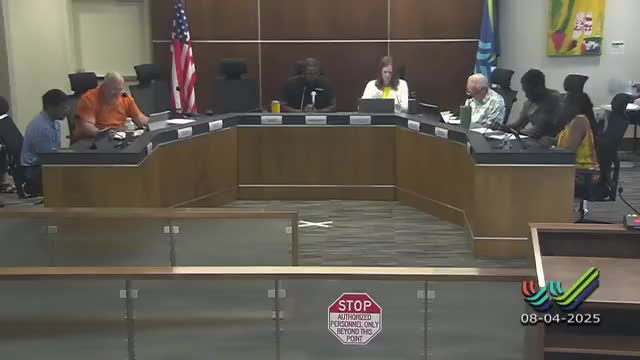
Summary
The City Council approved a development agreement to rehabilitate the vacant building at 3350 University Avenue into 58 residential units and authorized a $290,000 infill payment tied to a minimum assessed value of $2.5 million.
The Waterloo City Council on Monday approved a development agreement allowing the rehabilitation of the building at 3350 University Avenue into 58 multiple-family units and authorized an infill incentive of $5,000 per unit, totaling $290,000, officials said. The project must meet a minimum assessed value of $2,500,000 to qualify.
Council members and staff said the building has been vacant for years and that the rehab would create new housing near downtown. Community Planning and Development Director Noel Anderson said the amendment adjusts the project scope and funding sources and that some funding could come from nuisance bonds or University-area TIF funds.
Developer representatives described plans to remove vandalized structures, complete demolition work already underway, and build new units with modern systems. A developer representative said units would vary but average roughly 400–500 square feet and that leasing interest for similar projects has been strong. The developer said some units will be larger and the project includes a mix of efficiencies, one-bedroom and a few two-bedroom and accessible units.
Residents and council members pressed for details. David Dreyer, a resident who spoke during the item, asked about unit size and livability, saying he would not want to live in units smaller than about 900 square feet. The developer and staff responded that the project is aimed at single occupants or small households and uses space-saving designs such as Murphy beds; staff said the project meets programmatic requirements from lenders.
Council discussion repeatedly returned to finance and precedent. Council members expressed concern that classifying substantial remodeling as “infill” and paying incentives could set a precedent. Anderson said the city’s recently adopted Elevate housing policy is intended to keep Waterloo competitive with neighboring communities that offer multi-year abatements and that the agreement follows that policy.
Staff noted expected municipal benefits beyond property tax: the water utility estimated about $6,800 in additional annual water revenue from occupied units; other revenues from sewer use, local option sales and road use taxes were noted as indirect benefits. Construction timeline details provided by developer representatives said demolition and site work have begun; the developer hoped to start significant construction by the end of the year and target leasing season in April.
The resolution approving the development agreement passed on a roll-call vote recorded during the meeting. Council members who spoke in favor cited a need for new, safe housing options downtown; those opposed or skeptical urged caution about public incentives and asked for stronger long-term redevelopment planning.
The project follows prior council debate and a motion to reconsider at a prior meeting; staff said the process for reconsideration followed the city code and that the item returned to a subsequent agenda after a successful motion to reconsider.
If the project proceeds, it will add ground-floor commercial space, covered parking and a mix of unit types aimed largely at single-person households.
The developer and staff said they will return with standard permitting materials and further design documents as construction milestones approach.