
Commissioners refine ballot language for proposed 6% lodging tax, debate allocations for EMS, housing and childcare
Get AI-powered insights, summaries, and transcripts
Subscribe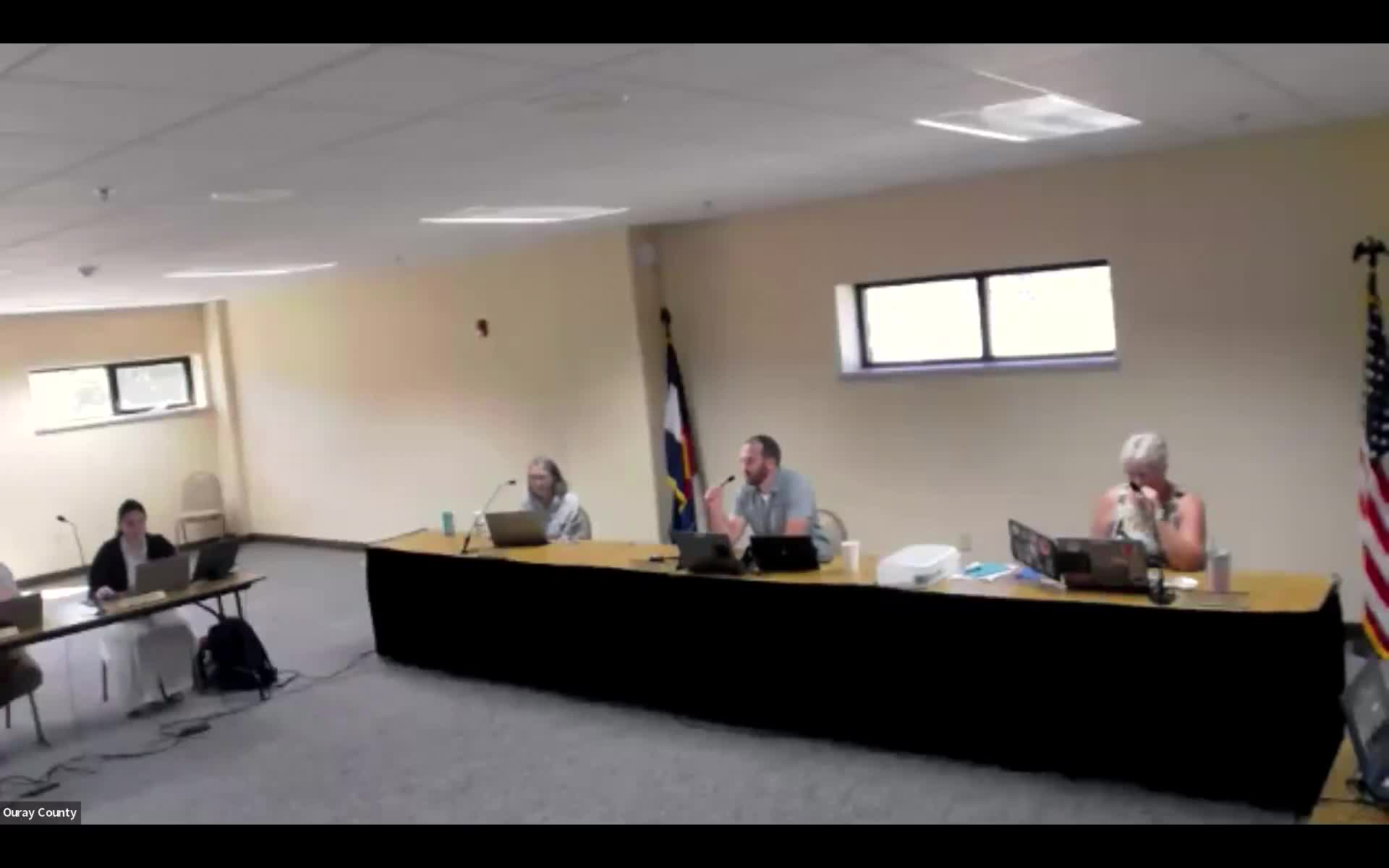
Summary
At a work session on 2025-10-05, the Board of County Commissioners reviewed draft ballot language to establish a 6% lodging tax that would apply only to the county's unincorporated areas and discussed how any revenue should be allocated among emergency services, housing and childcare.
At a work session on 2025-10-05, the Board of County Commissioners reviewed draft ballot language to establish a 6% lodging tax that would apply only to the county's unincorporated areas and discussed how any revenue should be allocated among emergency services, housing and childcare.
County Attorney Leo Casselli told commissioners he had circulated a draft question and supporting materials, including a CCI ballot-tracking spreadsheet and a link to the state lobbying restriction statute, which he identified as 1-45-117. He apologized that a cover memo was not saved and quipped, “the AI dog ate my memo.”
The commissioners and members of the public focused on three practical questions: (1) how much revenue the tax might produce, (2) whether commercial campgrounds and other lodging beyond short-term rentals would be included, and (3) whether the county should prescribe fixed allocations among uses or keep flexibility.
“EMS is operating in a $328,000 deficit,” said Devin Bolas, who appeared representing an EMS organization, and asked how any lodging-tax revenue would be split for emergency medical services. Preston Veil, a Town of Ridgway official, said Ridgway’s 6% lodging tax is projected to raise about $199,140 in 2025 and that the town currently splits revenue roughly 50/50 between marketing and housing/childcare work.
Casselli advised keeping the ballot question language simple and broad so that, if voters approve the measure, staff could later work with the Department of Revenue to determine exactly which lodging categories (for example, commercial campgrounds) are captured. He said the draft includes the statutorily required provision that 10% of lodging-tax revenue must be used for advertising and marketing, with the remaining 90% eligible for expanded uses such as law enforcement, fire protection, emergency medical services, housing and childcare.
Commissioners debated two allocation approaches. One option discussed was prescribing fixed splits (for example, 50% to workforce housing/childcare and 50% to public safety). Several commissioners warned that fixed earmarks could be overly restrictive; one said the fund is more likely to serve as a source for grant matches or to fill gaps (for example, matching funds for ambulances or housing grants) rather than to fully fund a recurring program.
Speakers also raised data questions. Staff and commissioners noted that some revenue estimates in the packet (the $188,000 figure cited in the draft) were based primarily on recorded short-term rental data and that sales-tax receipts and campground revenue are aggregated and harder to disaggregate quickly. Casselli and staff committed to continue gathering STR (short-term rental) and other lodging data before the final ballot text is published.
Members of the public urged clearer wording and outreach. One resident, Dolgio, asked that the ballot language and outreach emphasize “sustainable” tourism or sustainable marketing rather than only “advertising,” because locals often view marketing as increasing visitation rather than managing it. Commissioners agreed they could add the modifier “sustainable” to the marketing phrase if it would help messaging, but noted the marketing carve-out is required by state statute.
The board reviewed example language used in other counties (including Gunnison and Eagle counties) and created a redlined, cleaned draft during the session. Commissioners instructed staff to make non‑substantive, clerical edits (formatting, grammar, statutory wording where required) and return a final clean version for formal consideration at next week’s meeting.
No formal vote on a final ballot question occurred at the work session; the body authorized staff to prepare a revised draft for the next public meeting.
The discussion closed with practical next steps: staff will continue to clarify which lodging categories are captured under the proposed language, attempt to refine revenue estimates (including STR snapshots cited in the packet), and prepare public-facing FAQ language explaining that the proposed lodging tax applies only to unincorporated areas and is primarily paid by visitors rather than county residents.