
District attorney: felony filings down, misdemeanors rebound and diversion programs remain active
Get AI-powered insights, summaries, and transcripts
Subscribe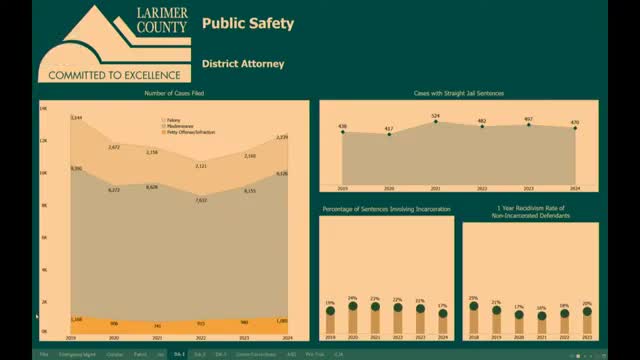
Summary
Larimer County District Attorney Gordon McLaughlin told commissioners the office’s felony caseload has declined while misdemeanor filings have rebounded to pre‑COVID levels, juvenile filings are lower, and adult diversion and deferral programs continue with strong success rates.
Larimer County District Attorney Gordon McLaughlin told the Board of County Commissioners on Aug. 27 that his office’s felony caseload has trended downward while misdemeanors have returned to pre‑COVID levels, and that juvenile filings remain well below prior goals.
“We start on the left at over 3,000, and now we’re, you know, just at about 2 and a quarter,” McLaughlin said of total felony caseload trends. He said misdemeanor filings have rebounded and that a 2022 legislative change that reclassified some offenses contributed to shifts in case types.
McLaughlin and staff emphasized diversion and deferral options as active tools: adult diversion enrollments and deferral program participation produced high reported success rates. “That success rate is really high. So we are choosing the right people to take advantage of this,” he said, noting the office seeks to target the most appropriate population for diversion.
He noted juvenile filings have fallen sharply—about 400 juvenile cases filed annually—and that pre‑file diversion (cases resolved without filing) has increased, leaving a smaller but typically higher‑risk juvenile caseload. McLaughlin said a previously reported graph contained a labeling error: the 2023 number for one series should read 1,195 (not 1,995).
On victim‑services metrics, McLaughlin said the office tracks both total contacts (calls, letters, in‑person meetings, victim‑impact statements) and the underlying count of victims served; he said total touches can decline as the office reduces time‑to‑disposition (fewer hearings or status events generate fewer contacts even while serving more victims overall).
The district attorney, staff and commissioners discussed competency cases and court processing time as contributors to jail populations and case backlogs. McLaughlin said the office has worked to reduce time‑to‑resolution and continues to refine data reporting for victims and diversion success.