
Sheriff: co‑responder mental‑health teams tied to fewer crisis incidents reaching law enforcement
Get AI-powered insights, summaries, and transcripts
Subscribe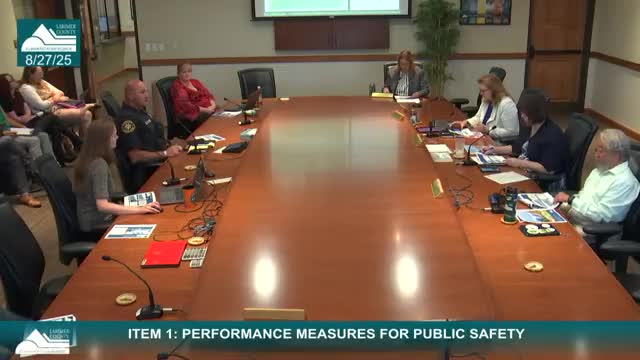
Summary
Captain Tim Keaton told commissioners that Larimer County’s clinician co‑responder program has been associated with fewer incidents escalating to law enforcement and with a 41% decline in a measured incident category from 2022 to 2023.
Captain Tim Keaton of the Larimer County Sheriff’s Office told the Board of County Commissioners on Aug. 27 that the agency’s co‑responder program—deputies paired with clinicians—has reduced incidents that escalate into law‑enforcement cases while increasing follow‑up and resource connections.
Keaton said the agency expanded co‑responder coverage after securing opioid‑related grant funding and extended hours beyond daytime shifts. “By having this checkup, I think we’ve substantially reduced the number of incidents that rise to the level of being needed to be reported to law enforcement,” he said, describing clinicians’ regular follow‑up calls and outreach as a preventive measure.
Keaton and several commissioners cited program metrics reported to the Regional Opioid Abatement Council: a 41 percent decline in the measured incident category in 2023 compared with 2022, and a large increase in the number of co‑responder units and calls they handle. Commissioners emphasized additional benefits: program contacts free up patrol deputies for other calls and reduce arrests; one commissioner said about 2 percent of people interacting with co‑responders were referred into the criminal‑justice system while the rest received community resources, transport to care or a safety plan.
The sheriff’s presentation also described patrol trends: calls for service have trended upward over several years, with an apparent dip attributed to a record‑system change; wildfire initial‑attack responses are frequent but most remain under one acre; and the sheriff’s office is designated as a designated emergency response authority for certain hazmat incidents while the Colorado State Patrol handles most roadway hazmat incidents.
Commissioners asked for additional data that would support program evaluation: counts of repeat calls for the same individuals; reason breakdowns for co‑responder responses (for example, suicidal ideation, substance abuse, family disturbances); and patrol call volumes by district (to understand local coverage needs such as in Red Feather Lakes).
Keaton said the office can provide those district and repeat‑call breakdowns and will follow up. Commissioners praised the co‑responder work, noting the program’s effect on community safety and deputy workload.