
Child-welfare spending pressures force staffing and service reductions; officials warn of potential service trade-offs
Get AI-powered insights, summaries, and transcripts
Subscribe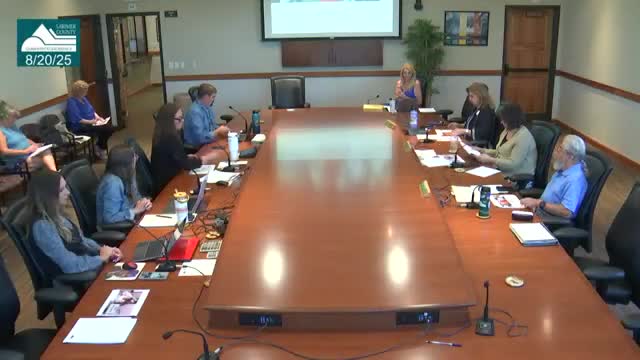
Summary
Larimer County child-welfare leaders reported multi-million-dollar overspending driven by placement costs, higher acuity and underfunded allocation formulas; the department plans staff reductions and cuts to contracted prevention services.
Thad Paul, division manager for Child, Youth and Family at Larimer County Human Services, told the Board of Social Services on Aug. 20 that child-welfare spending for state fiscal-year 2024–25 ended the year overspent and that the department is planning additional staffing and service reductions to bring spending closer to its allocations.
Why it matters: officials said placement costs, higher family acuity and mismatches between allocation formulas and actual costs are driving repeated overspend across the child-welfare block, core services and workload allocations. Managers warned that further reductions in prevention services and staff could raise the risk of increases in out-of-home placements.
Paul explained that the child-welfare funding package is made of three main allocations: the block allocation (which funds staff, placements and related costs), a core-services allocation (funds community services that try to keep children safely at home), and a workload allocation intended to add caseworkers. He said the state’s new block allocation model would have cut the county’s allocation further this year, so the state applied a limiter to hold allocations harmless for this cycle. Paul said that, absent the limiter, Larimer County would have faced a $1.5 million reduction under the new formula.
The department reported an overspend of roughly $3.1 million across the three child-welfare buckets for FY24–25; county officials said the closeout process covered the overspend this year but cautioned that repeated years of overspend increase future risk. Paul said the county has already reduced 19 full-time equivalents and cut about $1.2 million in contracted services over the last two years. Additional planned reductions include roughly nine more FTEs and about $283,000 in contracted services; the department also discontinued a family assessment-and-planning prevention team that had served high‑risk youth.
Officials said they are monitoring program outcomes closely. Paul and Human Services Director Heather O’Hare highlighted a decline in the county’s “remain home” performance measure—children who do not enter out‑of‑home care after a case opens—and warned that reduced core services plus rising family acuity could increase placements, which are paid from the block allocation and are typically more expensive.
The department said it is investing in workforce training and a new motivational‑interviewing grant from behavioral health services to improve caseworker skills and potentially draw additional federal funding; but leaders cautioned that staffing reductions carry turnover risk and could harm service continuity.
Ending note: county leaders said they will continue to adjust staffing and contracts to manage overspend while trying to limit impacts on families; they plan to return with more data at an Oct. 8 work session and recommended close monitoring of placements and “remain home” metrics.