
Neighbors oppose variance to split 25.62-acre Tazewell County farm into four home sites
Get AI-powered insights, summaries, and transcripts
Subscribe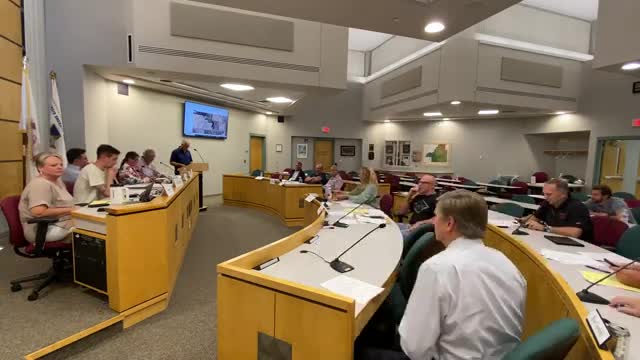
Summary
A petition to allow up to four residential lots on 25.62 acres drew objections at a Tazewell County Zoning Board of Appeals hearing, with neighbors citing soil productivity, water concerns and precedent; board deliberations were scheduled after public comment.
A petition to allow up to four residential lots on a 25.62-acre parcel in Tazewell County prompted extended public comment Tuesday night as neighbors and the property owner debated whether the request should be handled by rezoning, a special use permit or a variance.
The issue matters because the county’s zoning rules and soil-productivity standards determine whether farmland can be divided for homes. Neighbors told the Zoning Board of Appeals the property contains a greater share of highly productive soils than the ordinance allows for a land-division variance, while the applicant said limiting lots to four and adding setbacks would address local concerns.
At the hearing, Jared Beckendorf, a neighboring resident who said he reviewed soil productivity index (PI) data, told the board he ran acreage calculations and found roughly 7.9 acres of the 25.62 acres meet PI thresholds for what the county treats as highly productive ground. "In essence ... approximately 69% of this property is below the 125," Beckendorf said, adding that the county rule he referenced requires 75% of a site to be below a PI of 125 for approval under the cited provision. "So he does not meet that criteria for this property," he said.
Several neighbors said the division would change the character of the area, reduce privacy and risk local water-table and runoff impacts. Jody Ann Studley, who said she lives on 6.25 acres south of Lake Windermere Road, said she and others bought land expecting it would remain agricultural and told the board the proposal would intrude on long-established country views. "It sounds like the decision's already been made with a couple, minor decisions on how to do it," Studley told the board during public comment.
Mike Namm, another resident objector, framed the application as an attempt to circumvent established zoning processes. "This request has been used as a workaround to bypass a failed zoning attempt," Namm said, urging the board to reject the variance and preserve the integrity of the code.
Brad, the property owner and petitioner, said he prefers dividing the tract into four lots because prospective buyers have asked for 4- to 5-acre parcels. "I prefer 4 because the buyers that have called me are waiting for 4 to 5 acres, not 10, 12," he said, adding that he had offered to accept a setback of about 500–600 feet to address neighbors' concerns.
County planning staff clarified options for the board. "If you were to rezone it to A2, dwellings are only allowed on lots that are 10 acres or bigger. So he would only be able to divide this into 2 residential lots," a county staff member identified in the record as Jackie told the board.
Board members asked whether the request before them — a combination of a special use application and a variance to the code — was functionally different from a rezoning to A2 followed by separate variances. Several members expressed concern about using a variance to change the rule’s practical effect rather than applying the rule as written. One board member asked whether limiting the request to four lots with a 600-foot setback could be written into a special-use approval as an alternative to granting a variance; staff and the board debated that path.
There was no vote during the public-comment portion. The board concluded the hearing portion and moved to internal deliberations; a formal decision or vote was not recorded in the transcript.
Background and next steps: The petition concerns dividing a parcel currently described as A-1 (agricultural) in Tazewell County; speakers discussed rezoning to A-2 and options including a special use permit, a variance to code, and specific conditions such as a 600-foot setback and a cap of four lots. County staff told the board that a rezoning to A-2 would limit the site to two residential lots under the 10-acre rule, while the current filing asks the board to allow more than that by variance. The board moved to paperwork and deliberations after public comment ended; no formal action or vote was documented in the provided transcript excerpt.
Votes and formal actions: No motions, votes or final outcomes were recorded in the provided transcript excerpt; the board proceeded to deliberations after public comment.